
Prep Time: 15 minutes | Cook Time: 10 minutes | Total Time: 25 minutes | Servings: 4 | Calories: ~280 per serving
- Cook
- 2 min
- Total
- 2 min
- Makes
- 4 servings
My grandmother made this every Sunday for 30 years — a blazing hot pan, a mountain of vegetables in every color, and a sauce so good it made the whole apartment smell like a celebration. Her rainbow veggie stir fry wasn't trendy back then. It was just smart, gorgeous, and deeply satisfying. This complete guide gives you every technique, every shortcut, and every secret she passed down — plus the modern twists that make this recipe go viral on TikTok and Pinterest every single spring.
What Vegetables Make the Perfect Rainbow Stir Fry
The magic of a rainbow veggie stir fry starts long before the pan gets hot. It starts at the grocery store, or honestly, at my little balcony herb garden where I grab fresh chives before heading inside.
You want a minimum of five colors on that cutting board. Not four. Five. Each color represents a different family of nutrients, and together they make the plate look like something you'd frame.
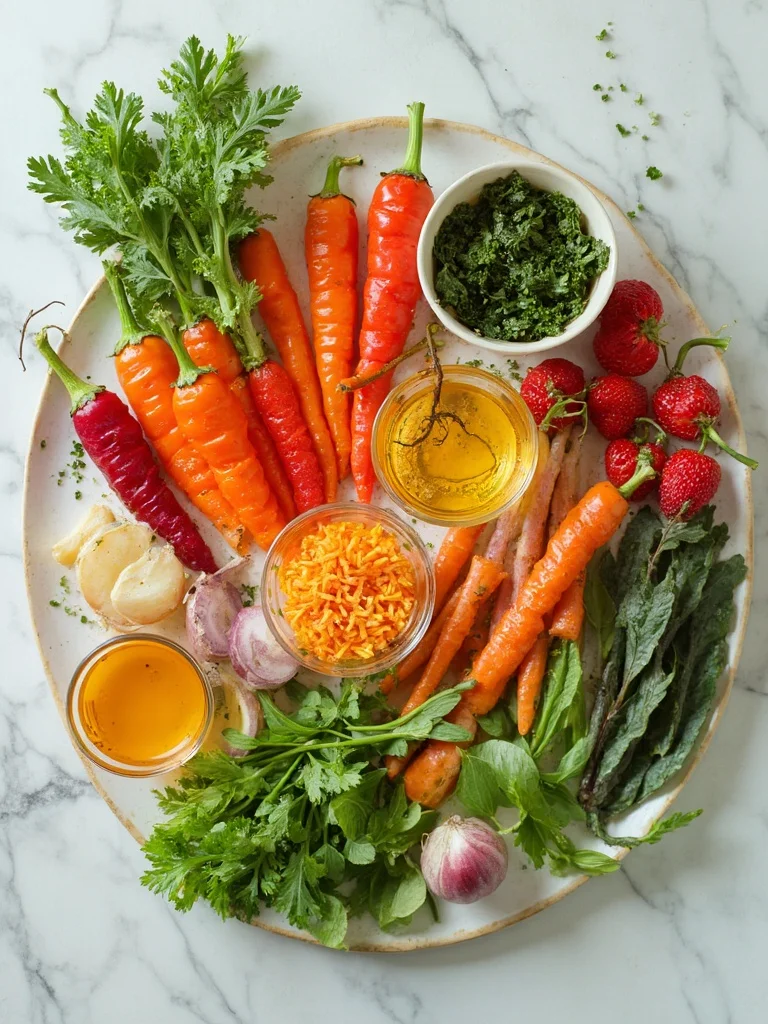
Here's the color lineup I use every single time:
- Red: Red bell pepper (½ cup, sliced thin)
- Orange: Carrots (1 medium, julienned) or sweet potato
- Yellow: Yellow bell pepper (½ cup, sliced thin)
- Green: Broccoli florets (1 cup) or snap peas
- Purple: Red cabbage (½ cup, shredded) or purple onion
- White/Cream: Mushrooms (½ cup, sliced) or water chestnuts
That's six colors, six textures, and — according to USDA FoodData Central nutrition data — a lineup that hits vitamins A, C, K, and a solid dose of fiber in a single bowl.
Cut everything into similar sizes. Roughly 1-inch pieces. This is non-negotiable. Different sizes mean uneven cooking, and uneven cooking means some pieces are mushy while others are still raw. My grandmother would flip that wok upside down if she saw mushy carrots next to raw broccoli.
How to Pick One Veggie Per Color for Maximum Nutrition
Think of it like a team. Each player has a role. Red bell peppers bring lycopene and vitamin C. Orange carrots deliver beta-carotene that converts to vitamin A. Yellow peppers are basically a vitamin C bomb — more than an orange by weight.
Green vegetables like broccoli or snap peas carry calcium, iron, and folate. Purple cabbage brings anthocyanins, the same compounds found in blueberries. One veggie per color keeps it simple and nutritionally complete.
Don't overcrowd your categories. One red, one orange, one yellow. That's it. When you try to add two reds — say, red pepper AND tomato — you lose visual contrast and the rainbow effect disappears fast.
Léa, my 12-year-old, actually helps me pick the colors now. She treats the produce section like an art project. It's become our thing, and I love it more than I can say.
How to Keep Every Veggie Crispy and Bright
This is where most home cooks go wrong. They grab a medium pan, set it to medium heat, dump everything in at once, and walk away. The result? A grey, steamed mess that smells okay but looks terrible and has zero texture.
High heat. That's the answer. Your pan — ideally a wok, but a large cast iron or stainless skillet works — needs to be screaming hot before anything touches it. I mean visibly hot. Hold your palm 6 inches above the surface and you should feel it within 3 seconds.
Add 2 tablespoons of avocado oil or sesame oil. It should shimmer and ripple the moment it hits the pan. That shimmer is your green light.
Now, add vegetables in order of cooking time — hardest first:
- Carrots and broccoli stems go in first — cook 2 minutes, stirring constantly
- Broccoli florets and mushrooms join next — cook 1 more minute
- Bell peppers and snap peas go in last — cook 1–2 minutes maximum
- Purple cabbage literally goes in the final 30 seconds — it just needs to soften slightly
Never cover the pan. Not even for a second. Covering creates steam, and steam is the enemy of crunch. Keep that lid in the drawer where it belongs during a stir fry.
And pat your vegetables dry before cooking. Really dry. Moisture on the surface of a vegetable drops the pan temperature immediately and creates that dreaded steam effect. A quick press with a paper towel takes 30 seconds and makes a dramatic difference.
What Sauce Actually Makes a Healthy Rainbow Veggie Stir Fry Sing
My grandmother's sauce was simple. Three ingredients. Soy sauce, a little honey, and garlic. That's it. I've tested dozens of versions over the years — teriyaki, peanut, miso, coconut aminos — and I always come back to the soul of hers with a few small additions.
Here's the sauce I make for this healthy rainbow veggie stir fry every single time:
- 3 tablespoons low-sodium soy sauce
- 1 tablespoon sesame oil (toasted)
- 2 tablespoons rice vinegar
- 1½ tablespoons honey
- 2 cloves garlic, minced
- 1 teaspoon fresh ginger, grated
Whisk that together in a small bowl before you turn on the stove. Have it ready to pour. Stir fry moves fast — you don't have time to measure while the pan is roaring.
Want a thicker, glossier sauce? Mix 1 teaspoon cornstarch with 2 tablespoons cold water and whisk it into the sauce before adding. It thickens on contact with the hot pan and coats every single vegetable beautifully.
Add the sauce only in the final 30 seconds of cooking. This is the rule. Add it too early and your vegetables will steam in it, losing all that crunch you worked so hard to build. Thirty seconds, toss everything to coat, then plate immediately.
If you love experimenting with bold sauces, my garlic parmesan tortellini with sausage and broccoli uses a similar sauce-at-the-end technique that's worth studying. The principle carries across so many dishes.
Why Kids Eat This Easy Rainbow Veggie Stir Fry Every Time
Léa is twelve, and twelve-year-olds have opinions. Strong ones. About everything, but especially food. And yet this easy rainbow veggie stir fry? She eats it without a single negotiation. Not one.
Here's what I've figured out after years of cooking for a kid who went through a phase of only eating beige foods: presentation is everything at that age.
When a bowl looks like a painting — genuinely bright red, orange, yellow, green, purple — kids get curious before they get suspicious. The color does the convincing. I didn't teach Léa to love vegetables. I taught her to love color, and the vegetables came along for the ride.
Save this pin and make it the next chilly Sunday afternoon. You won't regret it — especially if you've got a picky eater at your table who currently pushes everything green to the edge of the plate.
The sauce also helps enormously. A salty-sweet-garlicky sauce makes almost any vegetable palatable to a kid. It's not a trick, it's just good cooking. My grandmother understood this intuitively — she never served a plain vegetable in her life.
Serve over rice. Léa eats more of the vegetables when they're mixed in with jasmine rice — the grains scoop up the sauce and suddenly every bite has something familiar alongside something new.
How to Swap Any Veggie for Picky Eaters Without Losing the Rainbow
The rule is simple: replace like with like, color with color. If your kid refuses broccoli, swap in green beans or snap peas or zucchini. Still green. Still crunchy. Still holds its shape. Nobody loses.
Here's a quick swap guide:
| Original Veggie | Color | Easy Swap |
|---|---|---|
| Broccoli | Green | Snap peas, green beans, zucchini |
| Carrots | Orange | Sweet potato, butternut squash |
| Red bell pepper | Red | Red onion, cherry tomatoes (add last) |
| Purple cabbage | Purple | Eggplant, purple asparagus |
| Mushrooms | Cream | Water chestnuts, baby corn |
The only rule I won't bend: keep at least four distinct colors. Drop below four and it's just a vegetable sauté. Nothing wrong with that, but it's not the rainbow anymore, and the visual magic is half the reason this recipe works so well with kids.
The One Trick That Changed My Quick Rainbow Veggie Stir Fry Forever
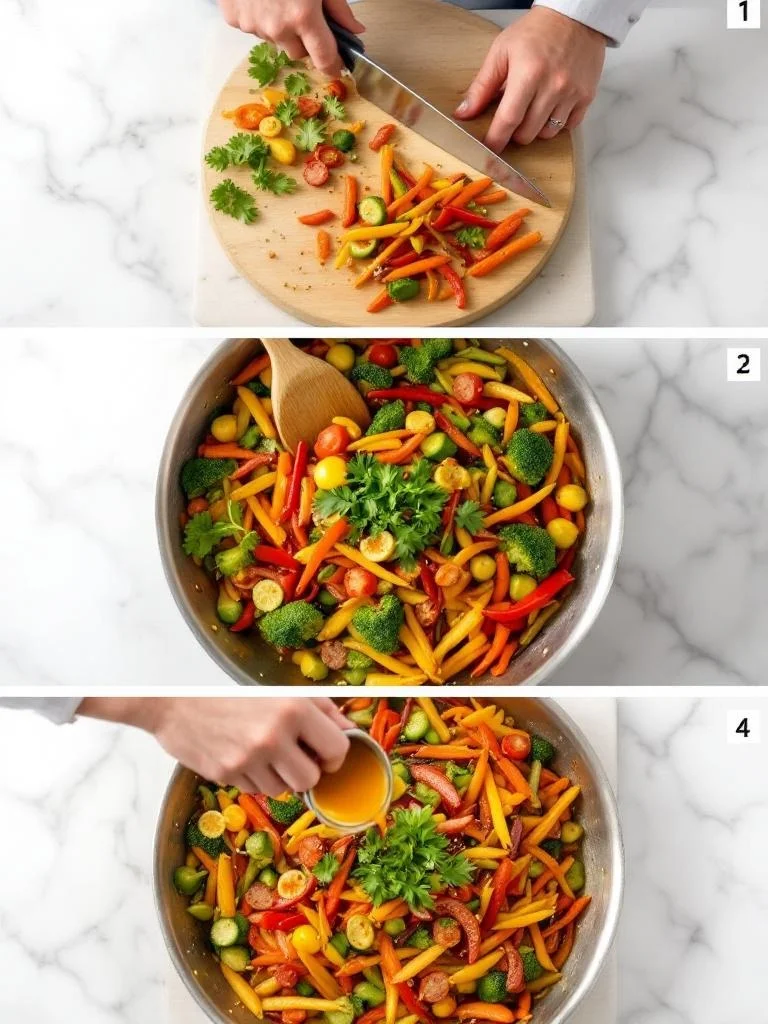
I cooked stir fry the wrong way for years. Truly. I'd heat the pan to medium, add all the vegetables at once, stir lazily while checking my phone, and wonder why the result was always a little sad.
Then my sister Melissa visited — she always brings some new idea she found online — and she said two words: "Batch cook." I rolled my eyes. She was right.
Here's the trick: if you're making a large batch of this quick rainbow veggie stir fry for four or more people, divide your vegetables into two or three batches and cook them separately. Then combine at the end with the sauce.
Overcrowding a pan is the single biggest mistake in stir fry. Too many vegetables at once drops the pan temperature dramatically. Instead of searing, they start steaming in their own moisture. You lose the color, the crunch, and honestly the entire point.
A 12-inch wok can handle about 3 cups of vegetables at one time. Measure before you start. If you've got more than that, cook in two rounds. It adds maybe 5 minutes but the result is completely different — brighter, crunchier, more vibrant.
This batch technique is the same reason restaurant stir fry always looks and tastes better than homemade. Professional woks run at temperatures most home stoves can't match. Batching compensates for that gap perfectly.
If you love building a full meal around this, my garlic butter steak bites with potatoes make an incredible protein pairing alongside a bowl of this stir fry — James requests that combination at least twice a month.
Can You Make Rainbow Veggie Stir Fry Ahead Without It Going Soggy
Short answer: prep ahead, cook fresh. That's the formula.
You can chop every single vegetable up to 3 days in advance. Store them in separate airtight containers in the fridge — each color in its own bag or container. This makes the actual cook time faster than ordering delivery.
Make the sauce up to 5 days ahead. It sits perfectly in a small jar in the fridge and actually deepens in flavor as the garlic and ginger meld together.
Cook your rice or noodles separately and store those separately too. The moment rice touches sauce in storage, it absorbs everything and turns to mush.
If you absolutely must store a finished rainbow veggie stir fry, keep it in an airtight container for up to 2 days. Reheat in a hot skillet with a tablespoon of water — not the microwave, which turns every crispy vegetable into something soft and sorry.
- Chop vegetables Sunday — cook fresh Monday through Wednesday
- Pre-mix sauce and store in a lidded jar
- Keep rice in a separate container from vegetables
- Never freeze finished stir fry — texture suffers completely
- Label containers with the day you prepped them
This whole prep-ahead system is exactly how I keep James fed on the nights he gets home late from logistics runs. He walks in the door, I hit the wok on high heat, and dinner is on the table in 8 minutes flat. That's real fast food.
For nights when I want to serve something hearty alongside this, my Texas Roadhouse-style butter chicken skillet pairs beautifully — the richness of the chicken balances the bright, fresh notes of the stir fry perfectly.
Why This Recipe Has Fed Three Generations
This recipe has fed three generations of my family. My grandmother made it with whatever grew in her garden that week. My mother made it with whatever was on sale. I make it with five specific colors because I know exactly what each one does nutritionally and visually.
The best rainbow veggie stir fry is always the one that reflects who made it. Grandma's had more garlic than anyone needed. Mine has a little more ginger. Léa, when she starts cooking her own version someday, will add something I haven't thought of yet.
That's the real secret of a recipe like this. It's not a formula. It's a framework. Learn the heat. Learn the order. Learn the sauce ratio. Then make it yours.
Browse more delicious recipes at lamyrecipes.com — there are hundreds of family-tested dishes waiting for you there.
Why Trust This Recipe
I've been making stir fry since I was eight years old, standing on a step stool beside my grandmother in her kitchen. I've made this particular rainbow version at least 200 times. My daughter eats it. My husband requests it. And every version I've tried — restaurant, takeout, other recipes — comes back to reinforce the same principles I learned watching Grandma move around that wok. If you have questions, I'm always at lamyrecipes.com/contact.
FAQ
How long should I cook vegetables in a stir fry?
Stir fry vegetables typically cook for 3–5 minutes total, depending on thickness and your preferred crunch level. Start with harder vegetables — carrots and broccoli stems need about 2–3 minutes. Softer vegetables like bell peppers and snap peas go in for the final 2 minutes. Keep heat high and stir constantly. Vegetables should be vibrant and tender but still slightly firm when you bite. If they look dull or feel mushy, they've cooked too long. Remove everything the moment they hit your preferred texture — they continue cooking from residual heat even off the flame.
Is rainbow veggie stir fry recipe good for meal prep?
Yes — but smart meal prep means prepping components, not the finished dish. Chop vegetables and store separately in airtight containers for up to 3 days. Mix your sauce and refrigerate for up to 5 days. Cook rice or noodles fresh or store them separately. On cook day, everything comes together in under 10 minutes. If you store a fully cooked stir fry, it keeps for 2 days in the fridge and reheats best in a hot skillet with a splash of water. Avoid microwaving — it makes vegetables soggy and kills the color.
What protein can I add to a healthy rainbow veggie stir fry?
Almost anything works. Tofu (firm or extra-firm, pressed and cubed) is the classic vegetarian choice — cook it first until golden, then set aside and add back with the sauce. Chicken breast sliced thin cooks in 3–4 minutes on high heat. Shrimp takes just 2 minutes per side. Thinly sliced beef or pork tenderloin adds richness. For a vegetarian protein boost, edamame or chickpeas stir in beautifully in the last minute. Always cook your protein separately from the vegetables, then combine at the sauce stage for the cleanest results. My family loves this dish with simply sautéed chicken thighs on top.
Your turn: What's your favorite way to make rainbow veggie stir fry? Do you stick to classic vegetables or do you swap things out based on what's in the fridge? Drop it in the comments — I read every single one and I'd love to know what's working in your kitchen.
Some links in this article are affiliate links. If you purchase through them, I may earn a small commission — at no extra cost to you. Thank you for your support!
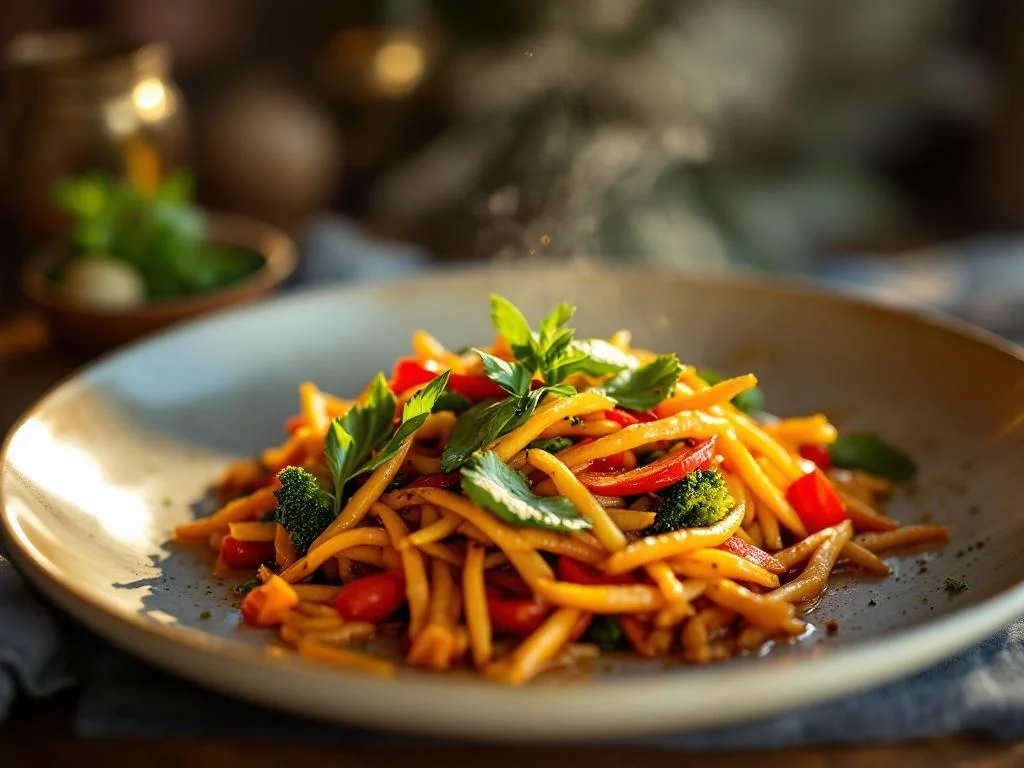
From the LamyRecipes kitchen
Rainbow Veggie Stir Fry
Prep Time: 15 minutes | Cook Time: 10 minutes | Total Time: 25 minutes | Servings: 4 | Calories: ~280 per serving
- Servings
- 4 servings
- Cook time
- 2 min
- Total time
- 2 min
Ingredients
- ½ red bell pepper (sliced thin)
- ½ yellow bell pepper (sliced thin)
- 1 medium carrot (julienned)
- 1 cup broccoli florets
- ½ cup red cabbage (shredded)
- ½ cup mushrooms (sliced)
- ½ cup snap peas
- 2 tablespoons avocado oil or sesame oil
- 2 cloves garlic (minced)
- 1 teaspoon fresh ginger (grated)
- Sesame seeds and sliced scallions for garnish
- Cooked jasmine rice or noodles (for serving)
Instructions
Make the sauce first. Whisk together soy sauce, sesame oil, rice vinegar, honey, cornstarch slurry, and red pepper flakes in a small bowl. Set aside.
Prep all vegetables. Pat them completely dry with paper towels. Cut everything into roughly 1-inch pieces for even cooking.
Heat the pan. Place a wok or large skillet over high heat for 2 minutes until very hot. Add avocado oil and let it shimmer.
Start with hard vegetables. Add carrots and broccoli stems. Stir constantly for 2 minutes.
Add broccoli florets and mushrooms. Stir fry for 1 more minute, keeping everything moving.
Add garlic and ginger. Stir for 30 seconds until fragrant — no longer or garlic burns.
Add bell peppers and snap peas. Cook 1–2 minutes, stirring constantly.
Add purple cabbage. Stir for 30 seconds.
Pour sauce over everything. Toss quickly to coat all vegetables. Cook for 30 more seconds until sauce thickens and glazes.
Plate immediately. Serve over jasmine rice or noodles. Garnish with sesame seeds and scallions.