Pumpkin custard bread pudding with a golden top and soft center.
- Estimated prep
- 45 min
- Estimated cooking
- 45 min
- Total
- 105 min
- Makes
- 6 servings
Pumpkin bread pudding is a cozy baked dessert made with cubes of day-old bread soaked in a cinnamon-spiced pumpkin custard. It is designed to have a golden, lightly crisp top and a soft, spoonable center. You can assemble the dish the night before and bake it when you need dessert—especially useful during a busy Thanksgiving week.
When the oven is busy with dinner, assembling dessert ahead gives you one less task before guests arrive. The key is to let the bread absorb the pumpkin custard and check the center before serving rather than trusting the golden top. With day-old bread, allow about 1 hour 45 minutes, including soaking and resting. Drying fresh bread or baking a chilled dish may take longer.
What Makes Pumpkin Bread Pudding Different?
Traditional bread pudding uses a mixture of bread, eggs, dairy, and sugar. If you want those pumpkin spices in a quicker breakfast, try our cinnamon roll pumpkin pancakes. This version adds plain pumpkin puree and pumpkin pie spice, creating an orange-tinted custard with familiar fall flavors. It is not pumpkin bread: you do not make a loaf batter or use baking powder. Instead, the bread cubes soak up a liquid custard and bake together in one dish.
The contrast between the exposed bread tips and the custard underneath is part of the appeal. For more defined cubes, choose bread that has dried slightly. For a softer, more uniform texture, let the bread soak toward the longer end of the suggested range. Bread density and oven performance vary, so use the texture and temperature cues below to judge when it’s ready.
Ingredients: What to Use and Why
The Recipe Card below contains the complete measurements for approximately six servings. For this pudding, use 6 cups of day-old brioche or challah, 1 cup plain pumpkin puree, 3 large eggs, 1 cup whole milk, ½ cup heavy cream, ½ cup packed light brown sugar, 2 tablespoons melted unsalted butter, 2 teaspoons vanilla extract, 1½ teaspoons pumpkin pie spice, ½ teaspoon ground cinnamon, and ¼ teaspoon fine salt.
The best bread for bread pudding
Brioche and challah are useful choices because their tender crumb can absorb custard while the cubes retain some structure. Cut the bread into roughly 1-inch pieces so the exposed edges can brown while the interior absorbs liquid. Measure the cubes loosely rather than packing them tightly into a cup. Bread size and dryness change how much custard it absorbs, so the visual check after soaking matters as much as the clock.
If you only have fresh bread, spread the cubes on a baking sheet and dry them in a 300°F oven for about 10–15 minutes. Check frequently: the goal is to remove some moisture, not to turn the bread into dark toast. Let the cubes cool briefly before adding the custard.
Pumpkin puree versus pumpkin pie filling
Choose unsweetened, plain pumpkin puree. Pumpkin pie filling is already sweetened and seasoned, so using it without changing the rest of the recipe can make the final dish unexpectedly sweet or strongly spiced. If using homemade puree, make sure it is thick rather than watery; extra moisture may affect how the custard sets.
Why the eggs and dairy matter
Eggs help the custard set during baking. Whole milk keeps the mixture pourable, while heavy cream adds richness. The combination is intended to be creamy without completely submerging the bread. Brown sugar sweetens the custard, vanilla rounds out the flavor, and a little salt balances the sweetness.
Spices and optional toppings
Pumpkin pie spice is a convenient blend, and the extra cinnamon emphasizes a familiar fall note. You can finish individual portions with a small drizzle of maple syrup, a spoonful of whipped cream, or powdered sugar. Chopped toasted pecans add crunch, but they are optional and should be identified to guests who avoid tree nuts.
Equipment and Pan Size
Use an 8-inch square baking dish, a large mixing bowl, a whisk, measuring cups and spoons, and a food thermometer. Butter the dish lightly before adding the bread. A different pan size changes the depth of the custard and may change baking time, so the recipe's timing should not be transferred automatically to a deeper or shallower dish.
How to Make Pumpkin Bread Pudding Step by Step
Step 1: Prepare the bread and dish
Grease the baking dish with a little additional butter. Add 6 cups of roughly 1-inch bread cubes and spread them into an even layer. If the bread is soft and fresh, dry the cubes first as described above. Try not to crush the bread when arranging it; irregular upper edges are what can become golden during baking.
Step 2: Whisk a smooth pumpkin custard
In a separate bowl, whisk the 3 eggs until combined. Add 1 cup pumpkin puree, 1 cup whole milk, ½ cup heavy cream, ½ cup packed brown sugar, 2 tablespoons melted butter, 2 teaspoons vanilla, 1½ teaspoons pumpkin pie spice, ½ teaspoon cinnamon, and ¼ teaspoon salt. Whisk until the pumpkin is evenly distributed and no large streaks remain. If the melted butter is very hot, allow it to cool slightly before adding it to the eggs.
Step 3: Pour, press, and soak
Pour the custard slowly over the bread, working across the whole dish rather than dumping it into one spot. Use the back of a spoon or clean hands to gently press any dry cubes toward the liquid. Let the mixture stand for 20–30 minutes, pressing down again halfway through. By the end, the bread should look evenly moistened, but you should still see individual cubes. Press an exposed cube gently: if its center is still dry and firm, turn it into the custard and give it more soaking time.
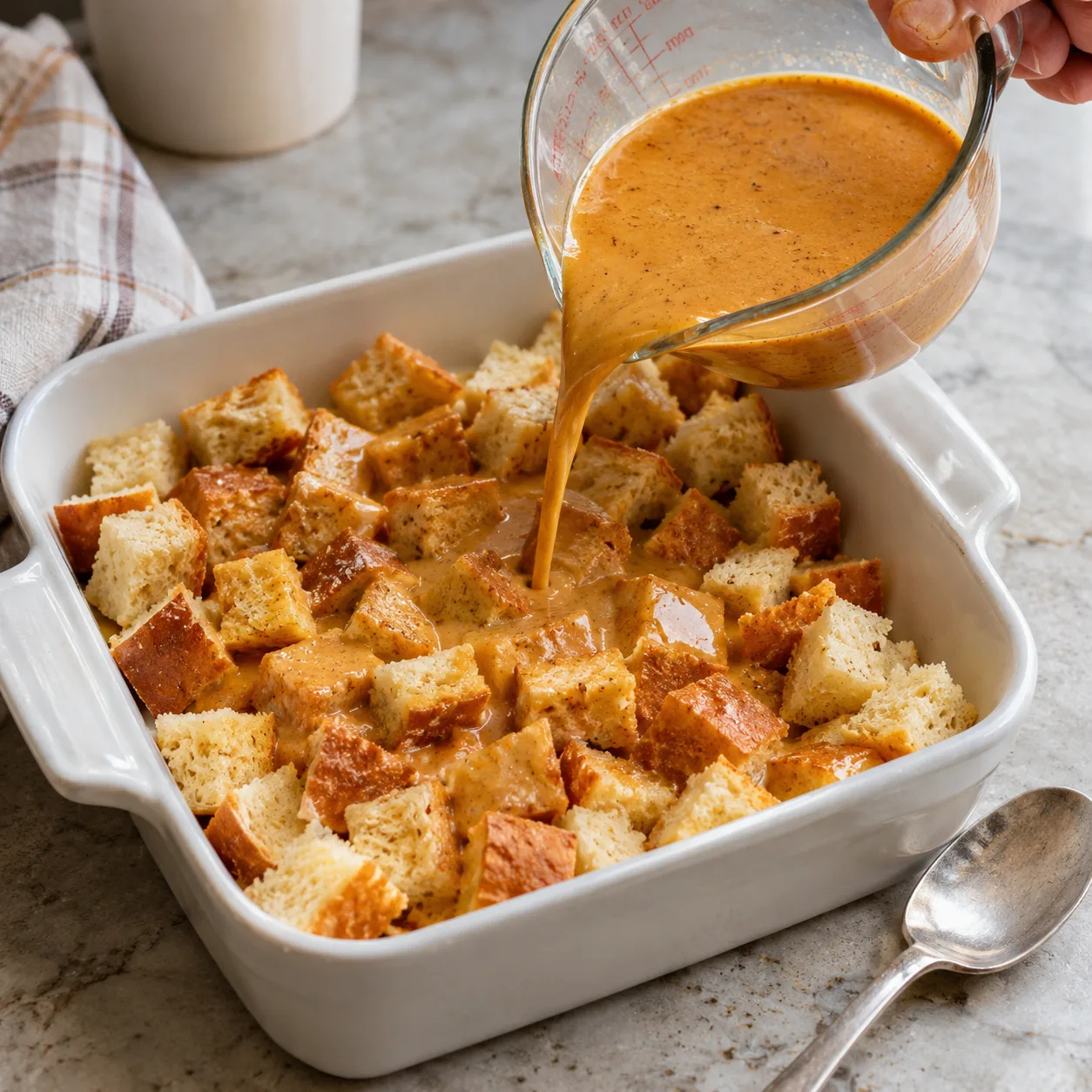
Step 4: Bake and check the middle
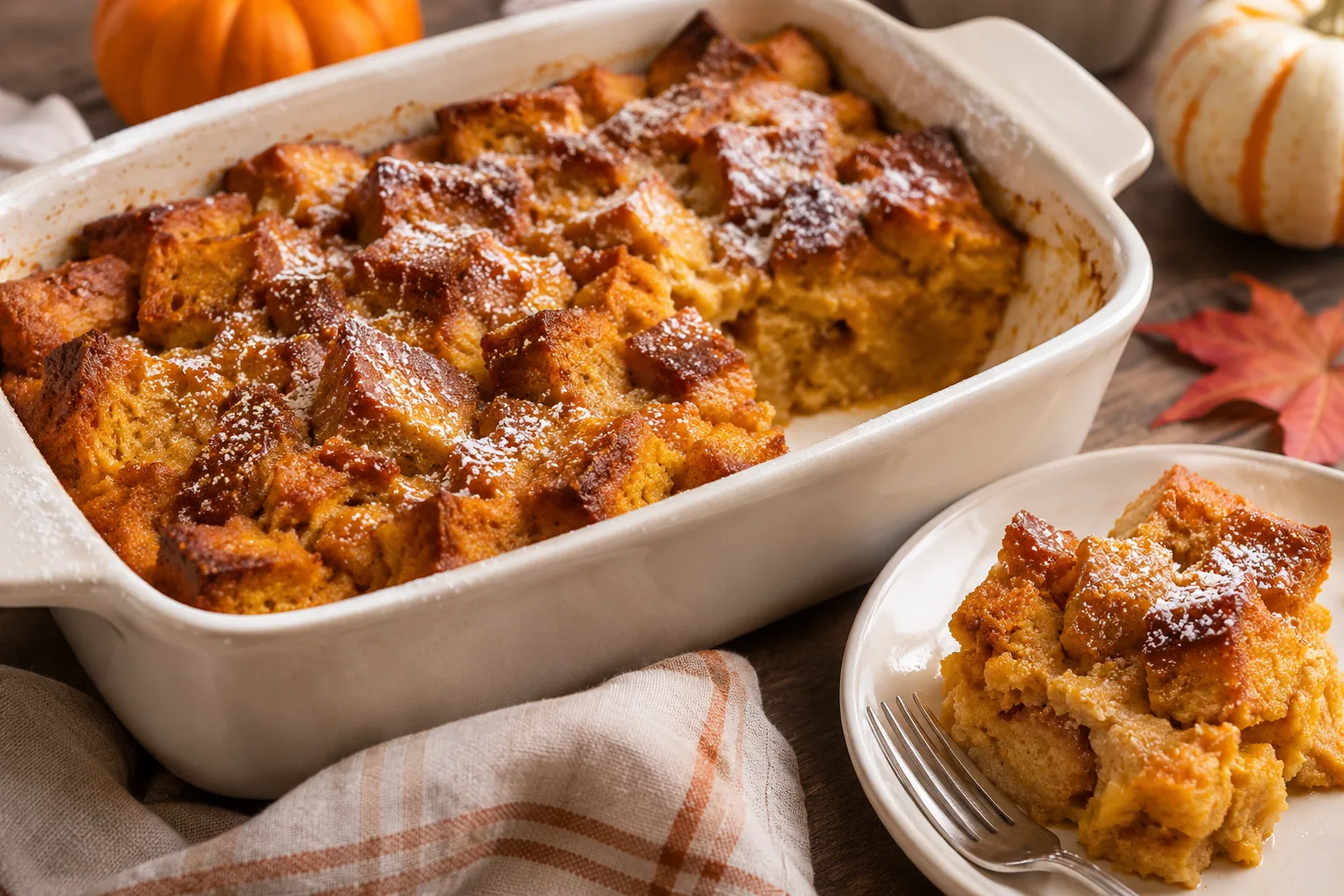
Preheat the oven to 350°F. Set the dish on the middle rack and bake uncovered for approximately 40–50 minutes. Look for a golden top and a center that no longer sloshes when the pan is gently moved. If the top browns too quickly, tent it loosely with foil. For this baked casserole, use a food thermometer to check that the center reaches 165°F, following FoodSafety.gov's casserole temperature guidance.
Step 5: Rest before serving
Remove the dish from the oven and let it stand for 10–15 minutes before cutting or spooning portions. Resting allows the hot custard to settle and makes serving easier. Offer toppings at the table so guests can adjust the sweetness. The baking time is approximate. A deeper dish or denser bread can change how quickly the center sets.
How to Make It Ahead for Thanksgiving
To reduce last-minute work, assemble the bread and custard in the buttered baking dish, cover tightly, and refrigerate for up to 12 hours at 40°F or below. The next day, preheat the oven and bake until the center is fully cooked. The colder mixture may need more time than a dish assembled at room temperature, so use the thermometer and center-set test rather than a fixed additional number of minutes.
If your baking dish is glass or ceramic, follow its manufacturer's directions for moving from refrigeration to a hot oven. Avoid sudden temperature changes that could damage the dish. You can also cube the bread and measure the dry spices ahead of time, keeping the custard preparation for baking day if refrigerator space is limited.
How to Tell When Pumpkin Bread Pudding Is Done
A browned top alone does not mean the middle has set. Check three things together: the exposed bread is golden, the center does not look liquid, and the center registers at least 165°F. Insert the thermometer into a custardy area rather than a dry bread corner. A few moist crumbs are expected; a pool of uncooked custard is not.
Troubleshooting Common Texture Problems
| What you see | What to check | What to do |
|---|---|---|
| Dark top, liquid center | The surface browned before the custard set. | Tent loosely with foil and keep baking. Check the center with a thermometer. |
| Dry bread pockets | Some cubes never contacted the custard. | During soaking, press the exposed pieces gently into the liquid. |
| Soft center after baking | A cooked, spoonable center differs from a pool of liquid custard. | Rest the baked pudding before serving. If the middle is still liquid, continue baking. |
The middle is wet while the top is dark
The top may be browning faster than the center cooks. Cover loosely with foil and continue baking, checking the center temperature. Avoid increasing the oven temperature, which can deepen browning without solving the undercooked middle.
Some bread cubes are dry
The custard may not have reached every cube, or the bread may have been unusually dense. Next time, pour the liquid more evenly, gently turn the cubes, and allow the full soaking period. Do not automatically add large amounts of milk to this formula without checking the custard balance.
The pudding is too soft to cut neatly
Bread pudding is naturally softer than a cake. Let it rest before serving and use a spoon for a more custardy version. If the middle is actually liquid, return the dish to the oven and verify its temperature before serving.
The top is pale
A pale surface may simply need a little more oven time, provided the center has not overcooked. Place the dish where air can circulate and avoid packing the bread completely flat. Do not rely on color as the only measure of doneness.
Serving Ideas for a Fall Dessert Table
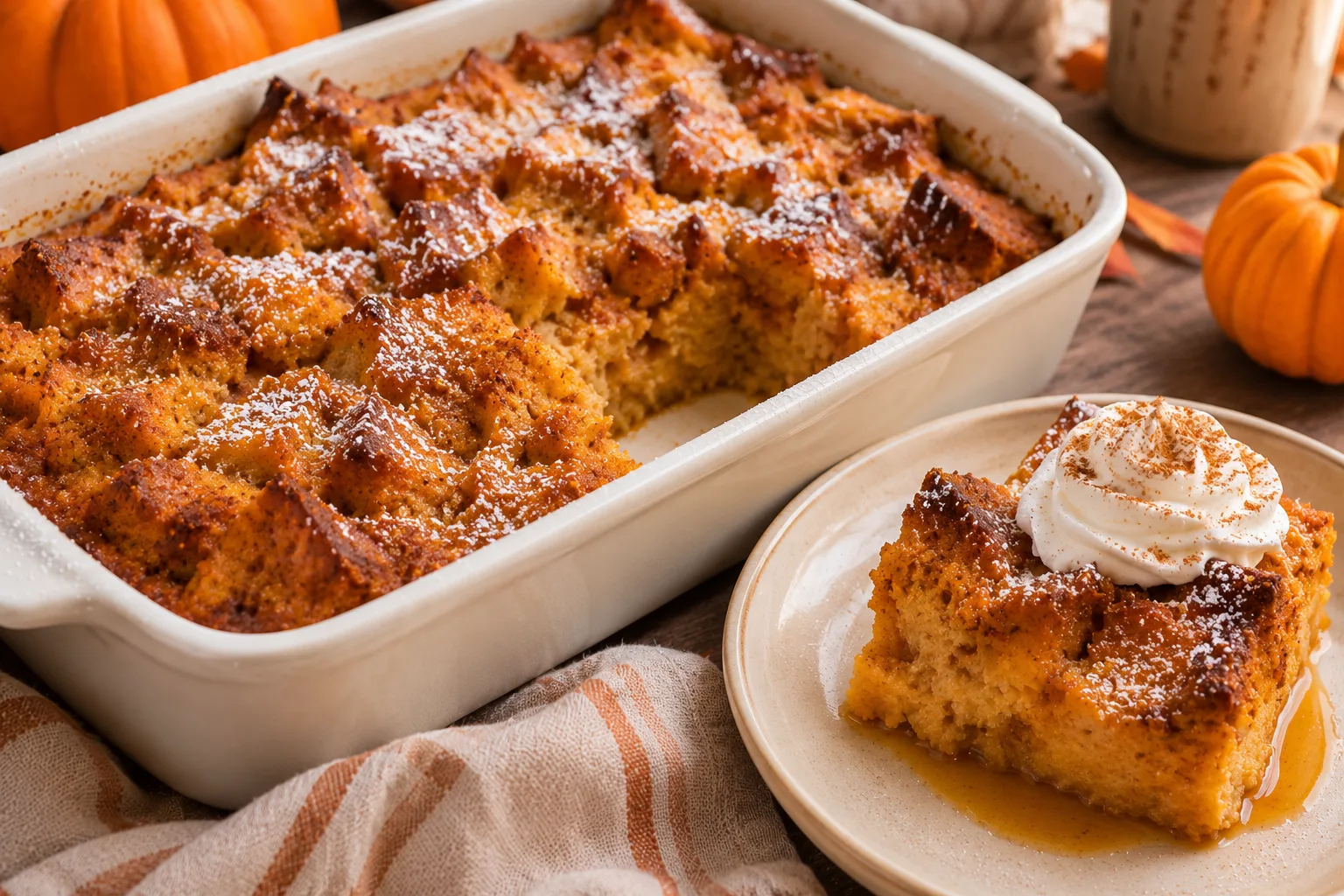
Serve warm in small bowls or on dessert plates. A drizzle of maple syrup is a simple option; whipped cream makes the serving richer. For contrast, offer toasted pecans separately. Because the custard already contains brown sugar, start with a modest amount of topping and let everyone add more if they wish.
If dessert needs to travel, Thanksgiving pumpkin cookies are easier to transport and serve one at a time. Save the bread pudding for a meal where you can serve it warm.
Storage and Reheating
Refrigerate leftovers promptly, within two hours of baking, in a covered container at 40°F or below. Use within 3–4 days, following the federal cold food storage chart for baked egg casseroles. Reheat portions until they reach 165°F. A covered oven-safe dish can help reduce surface drying during reheating. Do not leave this egg-and-dairy dessert sitting out through a long gathering.
Frequently Asked Questions
Can I make pumpkin bread pudding with fresh bread?
Yes, but gently drying fresh cubes before soaking is helpful. Fresh, very soft bread may absorb custard differently and lose some of its definition.
Can I use pumpkin pie filling instead of puree?
Plain pumpkin puree is recommended. Prepared pie filling contains additional sweetener and spices, so it is not a direct one-for-one substitute in this formula.
Can I assemble it the night before?
Yes. Cover and refrigerate the unbaked mixture for up to 12 hours, then bake until the center is set and reaches the appropriate temperature.
Can I make it without heavy cream?
Replacing the cream with more whole milk is a possible variation, but the custard will be less rich. Expect a lighter custard; check the center for liquid before serving rather than assuming the same baking time.
What if I don't have brioche or challah?
Another sturdy, slightly dry bread may work, but the texture and absorption can change. Avoid treating the 6-cup measurement as an exact weight for every type of bread.
Can I tell whether it is done from the golden top?
Use the color as a cue to start checking. The custard in the middle should be set and reach at least 165°F. If the top darkens before then, cover it loosely with foil and keep baking.
Why Bread and Custard Ratios Matter
Different bread puddings use different types of bread and custard proportions. Compare the King Arthur Baking pumpkin bread pudding recipe and Cooking Classy's version if you are exploring other approaches. Avoid transferring their baking times to this smaller pan and ingredient list. The measurements, yield and timing are estimates; check the center rather than relying on the clock. The federal temperature chart supplies the safety target for baked casseroles.
Serving Pumpkin Bread Pudding Warm
Whether you're baking for a holiday meal or a quiet weekend dessert, give the bread its soaking time before the dish goes into the oven. Once the center is set, let the pudding rest while you bring out the plates. Offer maple syrup at the table so each person can adjust the sweetness. Explore our Cozy Desserts for another dish to serve alongside it. Meet the cooks behind Lamy Recipes, or contact our editorial team with a question about the recipe.
Recipe
Pumpkin Bread Pudding: Easy Make-Ahead Fall Dessert
Pumpkin custard bread pudding with a golden top and soft center.
- Servings
- 6 servings
- Estimated prep
- 45 min
- Estimated cooking
- 45 min
- Total time
- 105 min
Ingredients
- 6 cups day-old brioche or challah bread cubes
- 1 cup plain pumpkin puree
- 3 large eggs
- 1 cup whole milk
- ½ cup heavy cream
- ½ cup packed light brown sugar
- 2 tablespoons unsalted butter, melted
- 2 teaspoons vanilla extract
- 1½ teaspoons pumpkin pie spice
- ½ teaspoon ground cinnamon
- ¼ teaspoon fine salt
Instructions
Butter an 8-inch square dish and add bread cubes. If fresh, dry bread at 300°F for 10–15 minutes first.
Whisk eggs, pumpkin, milk, cream, sugar, butter, vanilla, spices and salt.
Pour custard over bread and soak for 20–30 minutes. Press or turn any dry cubes gently into the custard.
Bake at 350°F for approximately 40–50 minutes until the custard is set and the center reaches 165°F. Tent with foil if the top browns too quickly.
Rest for 10–15 minutes and serve warm.