
An untested editorial adaptation of a freezer camping breakfast: pork sausage, potatoes, eggs and cheddar in flour tortillas, with temperature-based cooling, packing and skillet reheating guidance. Preparation and cooking times are estimates; chilling, freezing and reheating are additional.
- Estimated prep
- 20 min
- Estimated cooking
- 25 min
- Makes
- 12 burritos (12 servings)
Prepare the filling at home, freeze individually wrapped burritos, and take only the portions you can keep cold. At camp, a covered skillet and a food thermometer do the final work. This is a car-camping breakfast for a dependable refrigerator or ice-packed cooler, not a shelf-stable meal for a backpack.
Recipe-development note: This formula is an editorial adaptation inspired by the National Park Service freezer-burrito recipe. It has not been cooked or taste-tested by LamyRecipes. Ingredient ratios, handling suggestions and active preparation times below are proposed, not measured results. Safety temperatures come from the official sources linked at the end.
What happens at home, and what happens at camp?
At home, fully cook sausage, potatoes and eggs, chill the filling promptly, then assemble and freeze. At camp, maintain cold storage, thaw safely and heat each portion all the way through. Keeping the cooking and packing stages separate avoids handling raw breakfast meat at the campsite.
You need two skillets or one cleaned between components, shallow food containers, food-safe freezer wrapping, an insulated cooler with ice packs, a cooler thermometer, an instant-read food thermometer and an outdoor camp stove with a lidded skillet. Wash hands and utensils; take potable water for cooking and cleanup. Use fuel-burning equipment outdoors only.
Why this filling is deliberately simple
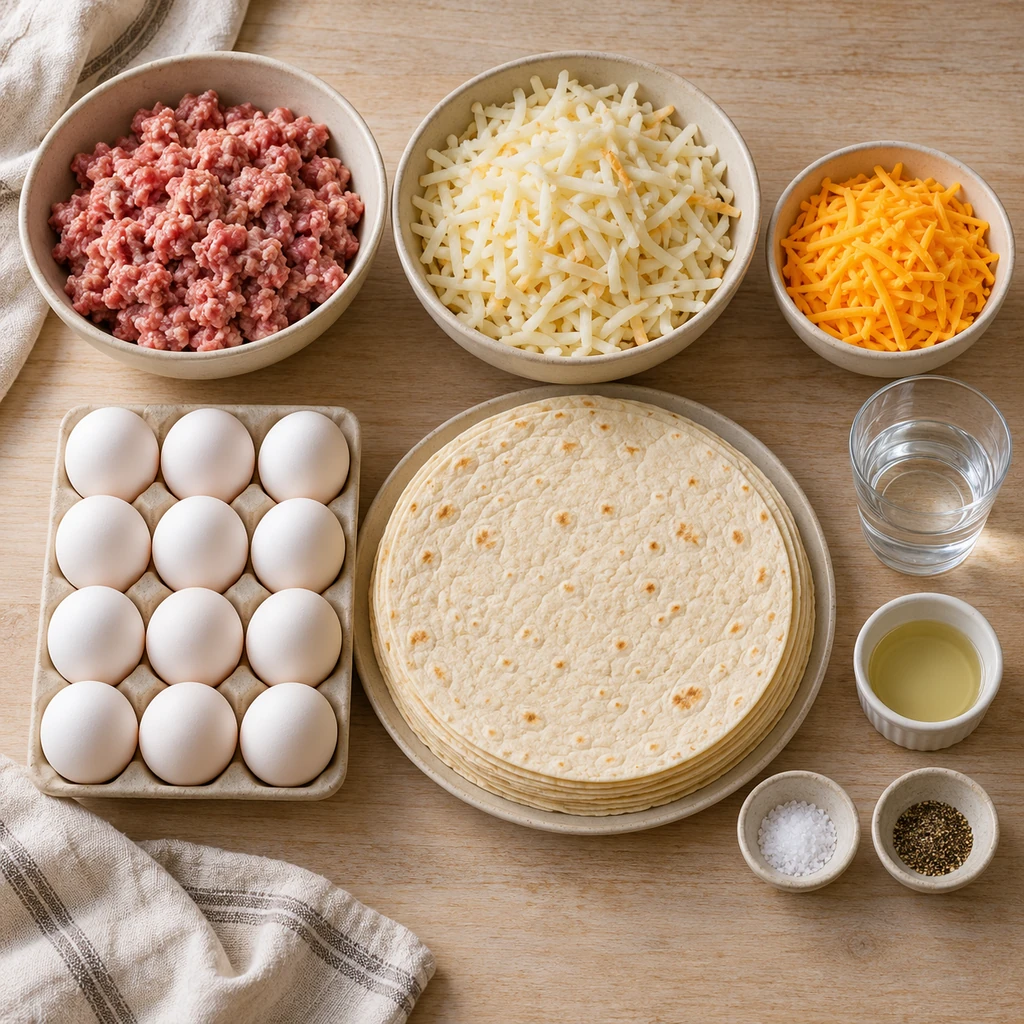
The batch makes 12 burritos with pork sausage, shredded potatoes, eggs and cheddar. The NPS reference uses 12 eggs, a pound each of hash browns and optional sausage, optional bacon, green chile and 10–12 tortillas; it leaves the cheese quantity open. Here, the yield is fixed at 12 large tortillas, bacon and green chile are omitted, and cheese, oil and seasoning quantities are specified as editorial choices. This is an adaptation, not the NPS formula reproduced unchanged.
Drain thawed hash browns before cooking. Keep salsa, sour cream and avocado as optional toppings added after reheating; packing them inside adds moisture and changes storage needs. These are texture-management suggestions, not a promise of a crisp tortilla after freezing. A turkey-sausage substitution needs the poultry cooking endpoint of 165°F, rather than the pork endpoint in this card.
Cook, chill, roll and freeze
Follow the Recipe Card below for the measured ingredients and sequence. Do not leave warm filling on the counter while you prepare a dozen wrappers. Divide it into shallow containers and refrigerate promptly. Assemble with chilled filling, working in small batches so the rest stays refrigerated.
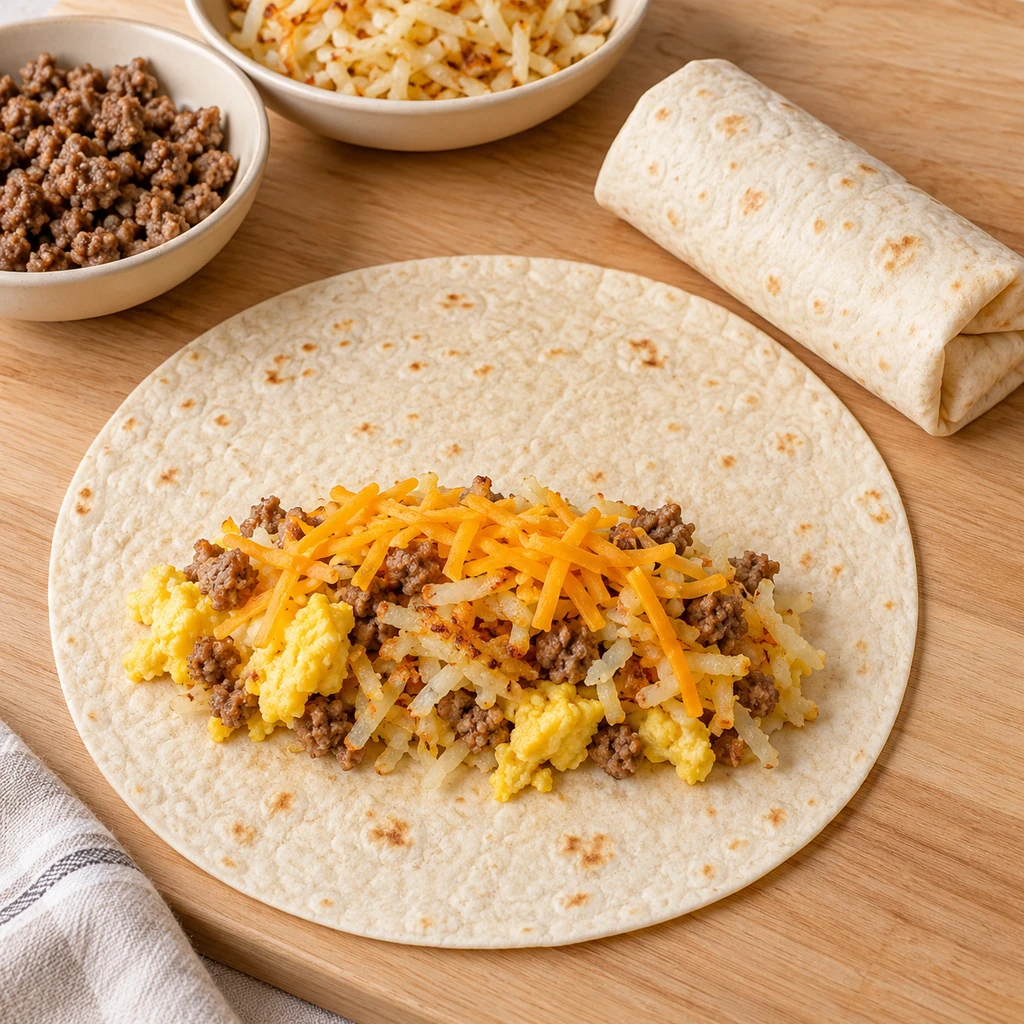
If a tortilla cracks, follow its package directions to soften it briefly before filling. Divide all components evenly rather than forcing a fixed cup measure into every tortilla. Roll with the seam underneath, wrap each portion for freezer storage, and label the date. If using foil as an outer layer, remove it completely before the skillet method below or any microwave use.
Storage and trip planning
Keep refrigerated food at 40°F (4°C) or below and frozen food at 0°F (-18°C) or below. FoodSafety.gov lists 3–4 refrigerated days for cooked egg casseroles and cooked-meat leftovers; it does not publish a shelf-life test for this particular burrito. Freeze this batch promptly after assembly. A one-month freezer target is a conservative editorial quality goal, not a proven spoilage deadline.
For this trip plan, thaw only the next meal's portions under refrigeration and aim to reheat them within 24 hours of thawing. That is a planning choice, not a new official rule or permission to reset the age of filling already held in the refrigerator. Do not keep a cooked batch refrigerated beyond the applicable leftover window before freezing it.
Pack a cooler you can actually monitor
Start with cold food and a prechilled cooler. Surround the wrapped portions with ice or frozen gel packs, place a thermometer where it can be read, and keep the cooler closed and out of direct sun. Separate cooked burritos from raw meat and its juices. A separate drinks cooler can reduce opening the food cooler.
According to the FDA, perishable food should not spend more than 2 hours outside safe cold or hot holding, reduced to 1 hour when outdoor temperatures exceed 90°F (32°C). Treat time out during preparation, transport and serving as cumulative, not a fresh allowance at each stage. If you cannot establish that the food was handled safely, discard it; reheating is not a rescue for food that was stored improperly.
Reheat thawed burritos in a covered skillet
Thaw under refrigeration before the planned breakfast. Remove all wrapping, set a burrito seam-side down in a lidded skillet over gentle heat, and add a little potable water around it if needed for steam. Turn regularly. Check the thickest center from the side with a food thermometer, avoiding the pan surface. Leftovers must reach 165°F (74°C).
Burner output, filling temperature, tortilla thickness and batch size vary, so there is no validated “minutes per side” in this untested formula. Reduce the heat if the tortilla browns before the center reaches the target. Do not increase the batch until the pan is crowded. Keep unreheated portions cold and serve heated portions promptly.
If a burrito is still frozen solid, do not thaw it on the picnic table. Continue safe refrigerator/cooler thawing for a later meal or choose a reheating method you can verify with a thermometer. This article does not promise a reliable direct-from-frozen skillet time. For more campsite cooking options, see our Blackstone breakfast guide for camping; a griddle is optional, not required for this recipe.
Common problems to watch for
A wet tortilla
Drain the potatoes, chill components before wrapping and keep wet toppings separate. Condensation and filling moisture can still soften tortillas. That is a texture limitation to evaluate during a kitchen trial, not a food-safety indicator.
A browned outside with a cold middle
Lower the heat, cover the skillet and turn the burrito. Use the thermometer endpoint in the card. Color, steam and touch cannot replace a center-temperature reading.
Can these travel without a cooler?
No. Eggs, sausage and cheese make this a perishable meal. If you cannot maintain cold storage, choose a different breakfast rather than treating a frozen burrito as an all-day unrefrigerated ice pack.
Sources and recipe limits
- National Park Service: Camping Recipe — Freezer Breakfast Burrito — Recipe reference only; NPS does not validate this adapted formula. Page reviewed/updated 2022-06-15.
- FoodSafety.gov: Four Steps to Food Safety — Prompt refrigeration, cold storage and refrigerator thawing. Page reviewed/updated 2023-09-18.
- FoodSafety.gov: Cold Food Storage Chart — Egg-dish/leftover storage context; not a burrito-specific shelf-life test. Page reviewed/updated 2023-09-19.
- FoodSafety.gov: Safe Minimum Internal Temperatures — Pork sausage and egg dishes 160°F; leftovers 165°F. Page reviewed/updated 2024-11-21.
- FDA: Handling Food Safely While Eating Outdoors — Cooler temperature, separation and outdoor time limits.
Sources checked October 20, 2026. No nutrition analysis, cooking trial, taste result, consumer testimonial or rating is claimed. The illustrations were created for this article and show the workflow rather than a photographed finished recipe.
Editorial recipe — not kitchen-tested
Make-Ahead Camping Breakfast Burritos: Freeze, Pack, and Reheat
An untested editorial adaptation of a freezer camping breakfast: pork sausage, potatoes, eggs and cheddar in flour tortillas, with temperature-based cooling, packing and skillet reheating guidance. Preparation and cooking times are estimates; chilling, freezing and reheating are additional.
- Servings
- 12 burritos (12 servings)
- Estimated prep
- 20 min
- Estimated cooking
- 25 min
Ingredients
- 12 large eggs
- 1 pound raw pork breakfast sausage, casings removed
- 1 pound frozen plain shredded hash browns, thawed in the refrigerator and drained
- 2 tablespoons neutral cooking oil, divided
- 1/4 teaspoon kosher salt
- 1/4 teaspoon ground black pepper
- 1 1/2 cups shredded cheddar cheese (6 ounces)
- 12 large flour tortillas (10-inch diameter)
- Up to 1/2 cup potable water for reheating the batch, about 2 teaspoons per burrito as needed
Instructions
Wash hands and keep raw sausage separate from ready-to-eat ingredients. Brown and crumble the pork sausage in a large skillet; verify 160°F (71°C) with a food thermometer. Transfer to a clean shallow container. Do not use the raw-meat plate for cooked filling.
Heat 1 tablespoon of oil in the skillet and cook the drained hash browns until tender, stirring as needed. Beat the eggs with the salt and pepper. In a separate skillet, heat the remaining 1 tablespoon oil and scramble the eggs until set; the egg mixture should reach 160°F (71°C). Keep cooked components in separate shallow containers.
Refrigerate the cooked fillings promptly in shallow containers. Do not wait for a large pan to cool on the counter. Keep the refrigerator at 40°F (4°C) or below. Perishable food must be refrigerated within 2 hours, or within 1 hour above 90°F (32°C).
Once the filling is chilled, divide the sausage, potatoes, eggs and cheddar evenly among 12 tortillas. Briefly soften tortillas according to their package directions if needed, keeping the filling cold. Leave room at the edges, fold in both sides and roll snugly. Wrap individually in food-safe freezer wrapping and place in a freezer bag or airtight freezer container. Label with the preparation date and filling.
Freeze promptly at 0°F (-18°C) or below. Use within 1 month as an editorial quality target, not a validated expiry for this formula. Pack frozen burritos with ice or frozen gel packs in a prechilled insulated cooler; use a cooler thermometer to maintain 40°F (4°C) or below. Keep cooked food separated from raw meat.
For the planned skillet method, thaw only the portions needed in a refrigerator at 40°F (4°C) or below, or in a cooler demonstrably maintaining that temperature. Never thaw on a counter or picnic table. This guide favors reheating within 24 hours of thawing as a conservative trip-planning choice; freezing does not make previously mishandled food safe.
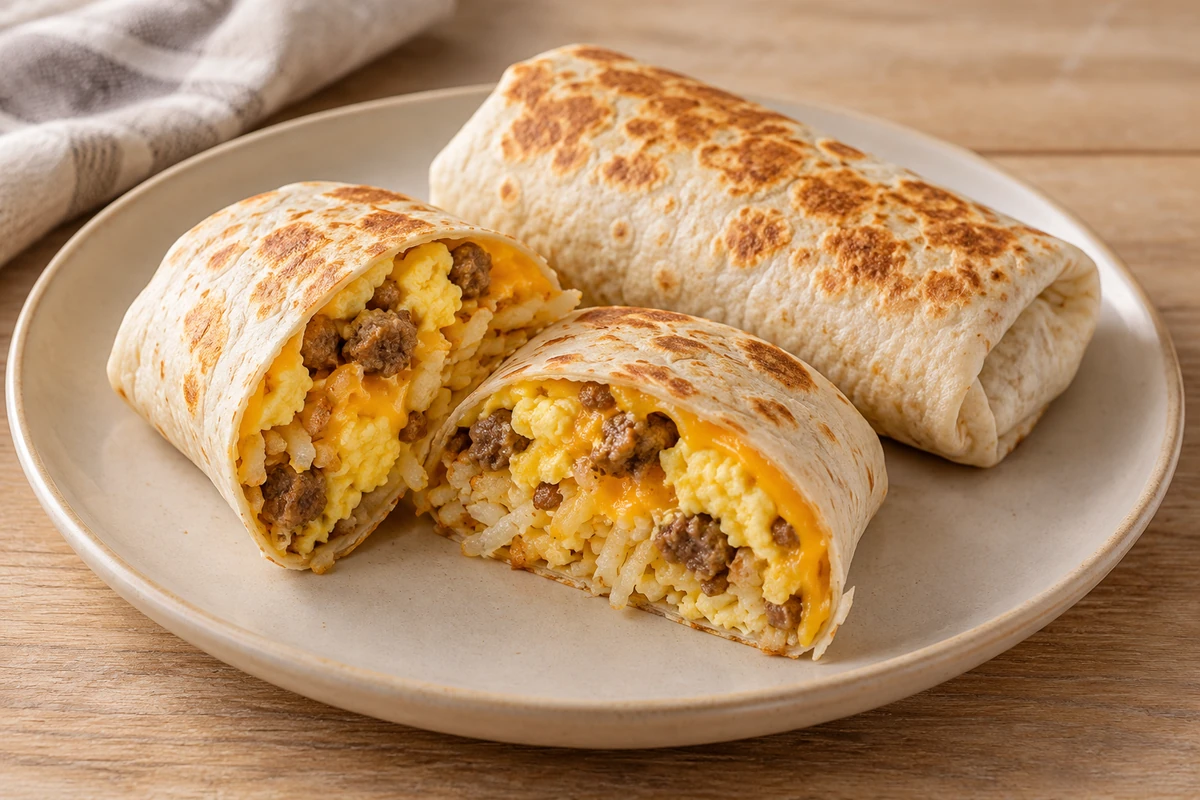
Remove every layer of wrapping. Put a thawed burrito seam-side down in a covered skillet over gentle heat on an outdoor camp stove. Add about 2 teaspoons of potable water around it if needed to create steam. Turn regularly and check the center with a food thermometer; serve only after it reaches 165°F (74°C). The tortilla may brown before the middle is hot. No universal reheating time has been validated for this recipe. Repeat in small batches and serve promptly. Never use a fuel-burning camp stove in a tent or enclosed vehicle.