

Prep Time: 15 minutes | Cook Time: 15 minutes | Total Time: 30 minutes | Servings: 4
- Makes
- 1 servings
My go-to light pesto pasta recipe started not in a fancy kitchen — it started on a Tuesday night when Lea came home from school completely starving and I had exactly 20 minutes before James walked through the door. Basil was piled high on my balcony, the pasta drawer was stocked, and somehow everything clicked. That dish — bright, herbaceous, and honestly lighter than I ever expected — became one of the most-requested meals in our house.
How to Make Light Pesto Pasta: Cook 12 oz penne until al dente. Blend fresh basil, garlic, olive oil, pine nuts, and Parmesan into a smooth pesto. Reserve 1 cup pasta water before draining. Toss hot pasta with 4–5 tablespoons pesto and splash in pasta water until silky. Serve immediately with fresh basil and a squeeze of lemon. Ready in under 30 minutes.
And honestly? This recipe has been all over Instagram Reels and YouTube Shorts lately — people are obsessed with this spring-herb-meets-easy-weeknight angle, and I completely get why. It's the kind of meal that looks impressive but comes together faster than you'd think. So whether you're cooking for a crowd at Thanksgiving or just feeding a hungry 12-year-old on a Wednesday, this guide covers everything.
The Exact Pesto Pasta Ingredients That Keep Every Bite Light and Flavorful
The secret to a great light pesto pasta recipe is choosing ingredients that pull their weight without loading down the dish. You don't need a mountain of oil or a cup of heavy cream. You need fresh, quality basics — and maybe a handful of herbs you grew yourself.
Here's what I use every single time:
- 12 oz penne pasta (or linguine — more on that below)
- 2 cups fresh basil leaves, packed
- 2 cloves garlic
- 3 tablespoons extra virgin olive oil
- ¼ cup pine nuts (or walnuts — also more on that)
- ⅓ cup freshly grated Parmesan
- Juice of 1 lemon
- Salt and black pepper to taste
- 1 cup reserved pasta water
That's it. Simple, clean pesto pasta ingredients that don't fight each other. I keep a large wooden spoon and a trusty food processor on the counter — those two tools make this recipe completely hands-off once the water boils.
| Ingredient | Quantity | Purpose |
|---|---|---|
| Penne pasta | 12 oz | Base, holds sauce well |
| Fresh basil | 2 cups packed | Primary herb flavor |
| Olive oil | 3 tbsp | Emulsifier, richness |
| Pine nuts | ¼ cup | Creaminess, texture |
| Parmesan | ⅓ cup grated | Umami, body |
| Pasta water | Up to 1 cup | Sauce emulsification |
| Lemon juice | 1 lemon | Brightness, cuts oil |
Why Swapping Heavy Pasta Shapes for Penne Changes Everything
I used to make this with spaghetti. And it was fine — but the pesto just kind of slid off. Penne, though? Total game changer. Those little tubes trap the sauce inside, so every single bite has that herby, garlicky coating you're after.
Rigatoni works too, especially for a heartier pesto penne pasta recipe feel. But for a lighter dish, I actually love trofie or fusilli — both have ridges that grip without being too heavy. Avoid wide, flat noodles like pappardelle here. They absorb too much oil and the whole dish ends up feeling dense.
What to Add to Pesto Pasta to Boost Flavor Without Adding Calories
Melissa — my sister, the experimental one — always asks "what if we added something unexpected?" And honestly, she's usually right. When it comes to what to add to pesto pasta to make it sing without piling on calories, I've tried a lot of things.
My favorites: halved cherry tomatoes (they add sweetness and a pop of color), a handful of arugula tossed in at the end, thinly sliced zucchini ribbons, or even canned white beans for protein. Lea goes absolutely nuts for it when I add roasted asparagus. James prefers it with a soft-boiled egg on top — very weekend-cook energy from him.
Pro Tip: A squeeze of fresh lemon juice right before serving completely transforms pesto pasta. It cuts through the oil, wakes up the basil, and makes the whole dish taste fresher. Don't skip it.
How to Make Light Pesto Pasta Less Heavy and Oily in 3 Simple Moves
The number one complaint I hear about pesto pasta? "It's just too oily." I felt that for years. My grandmother's version was gorgeous but definitely not what I'd call light. Learning how to make this light pesto pasta less heavy changed everything for weeknight cooking.

Here are the three moves that work every single time:
- Reduce the oil in your pesto — 3 tablespoons max per cup of basil. That's it. Don't pour generously.
- Use pasta water to emulsify — this is the actual secret (see below).
- Swap in Greek yogurt — mix 2 tablespoons of low-fat Greek yogurt into your pesto before tossing. Creamy without the weight of cream.
I almost gave up on making this dish light — I genuinely thought pesto just had to be heavy. But these three tweaks proved me completely wrong.
Why Reserved Pasta Water Is the Secret to a Silkier, Lighter Sauce
You know that murky water you always drain down the sink? Stop. That's liquid gold. The starch that leaches out of your pasta while it cooks turns that water into a natural emulsifier — it binds oil and water together in a way that nothing else quite replicates.
I learned this from watching James cook on weekends. He scoops out at least a full cup with a ladle before he even thinks about draining. When he tosses the hot pasta with pesto and splashes in a bit of that starchy water, the sauce turns silky and glossy without a drop of cream. It's honestly a little mind-blowing the first time you see it work.
Add the water gradually — like ¼ cup at a time — while you toss. You want the sauce to coat, not pool at the bottom of the bowl.
How Much Pesto You Actually Need Per Serving to Avoid an Oily Dish
This is the question nobody talks about. How much pesto sauce for 500g pasta? The answer: about 5–6 tablespoons of homemade pesto, or 4–5 tablespoons of store-bought (which tends to be oilier).
Per individual serving — roughly 125g cooked pasta — you're looking at 1.5 to 2 tablespoons. I know that sounds like almost nothing. But when you emulsify it properly with pasta water and toss everything together hot, it coats every piece beautifully. More isn't better here. It just gets greasy.
Pro Tip: Always toss your pasta with pesto while it's still hot and in the pan — never in a cold bowl. The heat helps the sauce bind to the pasta and creates that restaurant-quality coating you see in the Reels. A large skillet works better than a pot for tossing.

Store-Bought vs Homemade Pesto: Which One Actually Works Better for Light Pasta
Okay, I'm going to be honest here. Homemade wins on flavor — every single time. But I don't always make it from scratch. Some nights I'm reaching for the jar without a single ounce of guilt, because knowing how to use pesto from a jar with pasta properly makes a massive difference in the final result.
This section covers both, because a complete light pesto pasta recipe guide should give you real options.

How to Use Pesto from a Jar with Pasta So It Tastes Freshly Made
The trick to making jarred pesto taste almost homemade? Thin it with reserved pasta water — about ¼ cup pasta water per ½ cup of jarred pesto — and never let it boil. Boiling destroys the basil flavor completely. I made that mistake once and served weirdly bitter, khaki-green pasta to my family. James ate it politely. Lea did not.
Heat the pesto gently in a large skillet over low heat. Add hot drained pasta directly to the pan and toss for 2–3 minutes. If you want extra creaminess, whisk in 2 tablespoons of Greek yogurt and a splash of fresh lemon juice. Finish with fresh basil leaves and quality Parmesan. Honestly? It tastes 90% as good as homemade and takes 12 minutes total.
The Best Jarred Pesto Brands Ranked for Flavor and Calorie Count
I've tested a lot of these. Here's my honest ranking based on flavor, texture, and how light they actually are:
| Brand | Calories per 2 tbsp | Flavor Notes | My Verdict |
|---|---|---|---|
| Rao's Homemade | 80 | Rich, garlicky, very fresh | Best overall |
| Barilla Pesto | 70 | Mild, slightly sweet | Great everyday option |
| Trader Joe's Genova | 90 | Bold, herby, slightly salty | Worth the trip |
| Classico Traditional | 80 | Reliable, smooth | Best budget pick |
| DeLallo Basil Pesto | 100 | Deeply flavorful, oilier | Use less per serving |
Rao's is my personal favorite. But on a budget week, Classico never disappoints. And if you happen to live near a Trader Joe's... you know what to do.
Full Nutritional Breakdown: Exact Calories and Macros in Light Pesto Pasta
One of the things I love most about this healthy pesto pasta recipe vegetarian version is that it genuinely is lighter than it tastes. People assume pesto is heavy because of the oil and nuts — and yes, those add fat, but it's the good kind. According to olive oil health benefits and cooking uses, the monounsaturated fats in olive oil support heart health when consumed in moderate amounts.
How Calories Change When You Use Homemade Pesto vs Store-Bought
Homemade pesto made with 3 tablespoons olive oil per cup of basil runs about 60–70 calories per tablespoon. Most jarred pestos clock in around 80–100 calories per 2 tablespoons — but the serving size is sneaky small. Measure it. Don't eyeball it.
The biggest calorie variables? Pine nuts and oil. Using walnuts instead of pine nuts saves about 15 calories per serving. Using 2 tablespoons of olive oil instead of 4 drops the total by roughly 120 calories per batch. Small swaps — real results. That's what makes a creamy pesto pasta recipe feel light without tasting sad.
The Cheapest Pine Nut Substitutes That Don't Wreck Your Pesto Macros
Pine nuts are expensive. There, I said it. At $15–20 a pound, I'm not tossing them in casually on a Tuesday. But the good news is that several affordable substitutes work beautifully — and they don't tank your nutritional profile either.
| Nut/Seed | Cost (approx.) | Flavor Profile | Calorie Change vs Pine Nuts |
|---|---|---|---|
| Walnuts | $6–8/lb | Earthy, slightly bitter | -15 cal per serving |
| Almonds (raw) | $7–9/lb | Mild, clean | Similar |
| Sunflower seeds | $2–4/lb | Light, neutral | -10 cal per serving |
| Pumpkin seeds | $4–6/lb | Slightly grassy | Similar |
My personal favorite substitute? Walnuts, toasted for 2–3 minutes in a dry pan. The earthiness they bring to pesto is sooo good — honestly sometimes I prefer it over pine nuts. Don't judge me.
Vegan, Gluten-Free, and Dairy-Free Light Pesto Pasta Variations That Actually Taste Amazing
When Melissa first pushed me toward dairy-free cooking, I rolled my eyes a little. I'm not going to pretend otherwise. But she was right — these variations of a light pesto pasta recipe are genuinely delicious, not just "good for what they are." They stand on their own.
How to Make Pesto Completely Dairy-Free Without Losing That Creamy Texture
The dairy in traditional pesto is Parmesan — and its job is to add umami depth and a little creaminess. Nutritional yeast does that job surprisingly well. Use ¼ cup nutritional yeast in place of the cheese and the flavor difference is smaller than you'd expect.
Blend 2 cups basil, ½ cup walnuts, ⅓ cup olive oil, 2 garlic cloves, ¼ cup nutritional yeast, and a good pinch of salt until smooth. For extra creaminess — because Melissa always asks "what if we added something" — whisk in 2 tablespoons of cashew cream or tahini before tossing. It gives that silky coating without a single gram of dairy. Lea actually prefers this version now, which I never saw coming.
The Best Gluten-Free Pasta Shapes That Hold Light Pesto Sauce Perfectly
Gluten-free pasta has come a long way. I remember the first time I bought rice pasta — it turned to mush and I nearly cried over the sink. But chickpea pasta, lentil pasta, and brown rice fusilli? Completely different story.
For a gluten-free version of this dish, I'd rank the shapes like this: chickpea fusilli first (high protein, holds sauce brilliantly), then brown rice penne, then lentil rotini. The ridges on all three shapes grip the pesto beautifully. Just cook them to al dente — maybe 1 minute less than the package says — because they soften fast once you toss them with hot sauce. And always reserve that pasta water, even with gluten-free pasta. The starch still works.
Pro Tip: If you're making a gluten-free pesto pasta for a holiday gathering — which happens a lot around Thanksgiving and Christmas in our house — cook the pasta 30 minutes ahead, toss it lightly with olive oil to prevent sticking, then finish it in the pan with pesto right before serving. Works every time.
The Homegrown Herb Trick That Makes This Light Pesto Taste 10x More Vibrant
This is the part of this light pesto pasta recipe that I'm most proud of — and the part that nobody else really talks about. We live in a 100-square-meter apartment with a balcony that James built out into a little herb garden. And the basil we grow up there? It's not even in the same universe as the grocery store stuff.
Freshly cut basil — like, picked two minutes before you blend it — has a brightness and intensity that store-bought leaves simply don't. The volatile oils that give basil its flavor start to fade the moment it's cut. So using homegrown or farmers' market basil makes a genuinely noticeable difference in the final pesto.
Which Herbs from Your Garden Blend Best into a Bright, Light Pesto
Pure basil pesto is classic. But mixing herbs is where the magic happens for a truly vibrant, homegrown version. Here's what I've tested from our balcony garden:
- Basil + flat-leaf parsley (70/30): Adds freshness and a slightly peppery note. My favorite blend.
- Basil + arugula (60/40): Peppery, bright, slightly bitter. Melissa's obsession.
- Basil + mint (80/20): Surprising. Cooling and bright — works beautifully in summer.
- Basil + spinach (50/50): Mild, great for kids. Lea doesn't even notice the spinach.
All of these variations keep the dish in that healthy pesto pasta recipe vegetarian territory — light, herbaceous, and genuinely good for you. Spinach especially boosts nutrients without changing the flavor much at all.
How Long You Can Store Light Pesto Pasta Before It Loses Flavor
Cooked pesto pasta keeps for 3–4 days in the fridge in a sealed container. But here's the thing: the pasta absorbs the pesto as it sits, and by day two, the sauce vibrancy drops a bit. So if you're meal prepping, store the pesto and pasta separately when possible.
Pesto on its own? It lasts 5–7 days in a jar with a thin layer of olive oil pressed on top to prevent oxidation. Freeze it in ice cube trays for up to 3 months — this is honestly one of my favorite kitchen habits. I freeze huge batches of balcony basil pesto in late September every year, and we're pulling out pesto cubes all through the holidays.
To reheat stored pesto pasta, add 1–2 tablespoons of pasta water or broth to a skillet over medium heat, add the pasta, and toss for 2–3 minutes. Never high heat. Never the microwave if you can help it — it kills the basil flavor and makes the pasta rubbery. Speaking of hearty, warming holiday meals, we usually pair this dish alongside something like a comforting creamy chicken and vegetable soup when the weather turns cold in December.
Frequently Asked Questions About Light Pesto Pasta Recipe
How do I make light pesto pasta less heavy and oily?
The key is reducing oil and using Greek yogurt or ricotta instead of heavy cream. Use only 2–3 tablespoons of olive oil per cup of basil, and reserve 1 cup of pasta water before draining. Toss hot pasta with pesto, then add pasta water gradually to create a silky sauce without cream. For jarred pesto, mix 3 tablespoons with ½ cup low-fat Greek yogurt and pasta water to emulsify. The starch in pasta water naturally binds the sauce, eliminating the need for heavy cream entirely.
What's the best way to use jarred pesto with pasta?
Thin jarred pesto with reserved pasta water — use ¼ cup pasta water per ½ cup jarred pesto. Heat the pesto gently in a large pan without boiling. Add hot drained pasta directly to the pan and toss for 2–3 minutes so the starch emulsifies the sauce. For creamier texture, whisk in 2–3 tablespoons Greek yogurt. Finish with fresh basil, lemon zest, and quality Parmesan. This technique transforms basic jarred pesto into something that tastes genuinely homemade.
Can I use store-bought pesto instead of making it from scratch?
Absolutely. Quality jarred pesto is a real time-saver that yields great results when used correctly. Look for pesto with recognizable ingredients — basil, garlic, pine nuts, cheese, olive oil — and avoid those with preservatives. Mix one 6–7 oz jar with 1 pound cooked pasta and ¾ cup reserved pasta water for proper consistency. To brighten jarred pesto's flavor, add fresh lemon juice, minced garlic, and fresh basil leaves. You can achieve 90% of homemade quality in half the time — ideal for weeknight dinners.
What's a good substitute for pine nuts in pesto if they're too expensive?
Walnuts, almonds, sunflower seeds, and pumpkin seeds all work beautifully. Use the same quantity called for in your recipe. Walnuts are the closest flavor match — earthy and rich. Sunflower seeds provide mild nuttiness at significantly lower cost. Toast any nuts or seeds for 2–3 minutes before blending to enhance flavor. Each substitution creates its own unique profile without sacrificing the quality of the pesto.
How do I make pesto dairy-free for light pesto pasta?
Omit the Parmesan and use ¼ cup nutritional yeast instead for umami and creaminess. Blend 2 cups fresh basil, ½ cup nuts, ⅓ cup olive oil, 2 garlic cloves, ½ teaspoon salt, and ¼ cup nutritional yeast until smooth. For extra creaminess without dairy, blend 2 tablespoons cashew cream or tahini into the final sauce. This approach reduces fat while maintaining full satisfaction — perfect for dairy-free and vegan diets.
How long can I store light pesto pasta in the refrigerator?
Cooked pesto pasta keeps for 3–4 days in an airtight container. Store pesto and pasta separately if possible — pesto lasts 5–7 days in a sealed jar covered with a thin layer of olive oil. To reheat, add 1–2 tablespoons pasta water or broth to 1 cup pasta and warm gently in a skillet over medium heat for 2–3 minutes. Never use high heat, as it damages basil's delicate flavor. You can also serve it chilled as a pasta salad — light pesto pasta is genuinely versatile all week long.
Disclaimer: This article is for informational and culinary purposes only. It does not replace professional dietary or medical advice.
Final Thoughts on This Light Pesto Pasta Recipe
I've made a lot of pasta in my life. My grandmother's kitchen smelled permanently of garlic and basil, and I carry that with me every time I stand at the stove. But this light pesto pasta recipe — the one born from a frantic Tuesday night, balcony herbs, and a very hungry twelve-year-old — has genuinely become one of my most treasured dishes.
It's endlessly flexible. You can go full dairy-free like Melissa does, hearty and rustic like James prefers it, or bright and simple the way Lea loves. And around the holidays, when I want something that feels special but doesn't take all day, this light pesto pasta recipe is always the answer.
If you're planning a big family spread — maybe a Thanksgiving table loaded with festive pumpkin pie cookies for dessert — this pasta makes a gorgeous lighter main to balance out the heavier sides. And if you love easy weeknight cooking as much as I do, I think you'll also love browsing the seafood recipe collection on the site — there are some real gems in there.
Want something warming and slow-cooked alongside? Our slow cooker beef brisket vegetable soup is the perfect companion for cold-weather nights. And if you're doing a full spread of appetizers before the pasta, the easiest party appetizer ever from our site is literally foolproof.
Browse more delicious recipes at lamyrecipes.com — I'm always adding new family favorites. And if you want to know more about who's behind all of this cooking, come say hello on my About page. Or if you have a question, a suggestion, or just want to share how your pesto turned out, I'd genuinely love to hear from you on the Contact page.
Why Trust Me?
I'm Evelyn — a home cook of 20+ years, a mom, and someone who learned to cook at my grandmother's side before I ever owned a cookbook. Every recipe on this site has been made in my real kitchen, tested on my real family (James, Lea, and the ever-opinionated Melissa), and tweaked until it actually works on a weeknight. I don't write about food I haven't made, eaten, and honestly evaluated. This light pesto pasta has been on our table dozens of times — in every variation listed here — so you can trust that the advice in this guide is hard-won and genuinely useful.
I'd love to hear from you! What's your favorite way to make Light Pesto Pasta — do you go homemade with fresh herbs, or do you have a jarred pesto trick that changed everything for you? Drop it in the comments below!
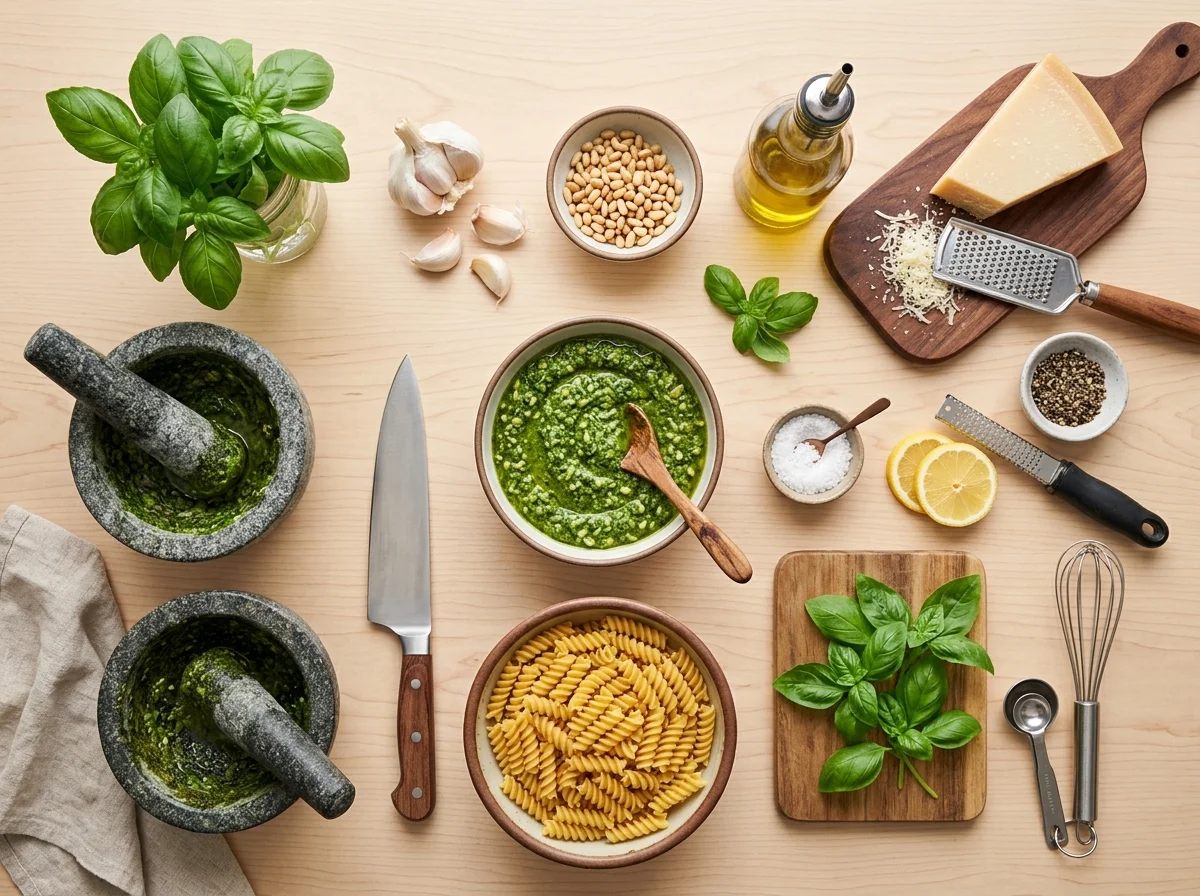
From the LamyRecipes kitchen
Light Pesto Pasta Recipe: The Complete Recipe Card
Prep Time: 15 minutes | Cook Time: 15 minutes | Total Time: 30 minutes | Servings: 4
- Servings
- 1 servings
Ingredients
- 12 oz penne pasta (or fusilli (trofie))
- 2 cups fresh basil leaves (tightly packed)
- 2 cloves garlic
- 3 tablespoons extra virgin olive oil
- ¼ cup pine nuts (or walnuts (toasted))
- ⅓ cup freshly grated Parmesan cheese
- Juice of 1 lemon
- Salt and black pepper to taste
- 1 cup reserved pasta water
- Optional add-ins: cherry tomatoes (arugula, zucchini ribbons, white beans)
Instructions
Bring a large pot of heavily salted water to a boil. Cook penne according to package directions until al dente. Before draining, scoop out 1 full cup of pasta water with a ladle and set aside.
While the pasta cooks, add basil, garlic, pine nuts, lemon juice, and a pinch of salt to a food processor. Pulse several times until roughly chopped.
With the processor running, drizzle in olive oil slowly until the pesto reaches a thick, smooth consistency. Add Parmesan and pulse 2–3 more times. Taste and adjust salt and pepper.
Drain the pasta (remember: water is already reserved). In a large skillet over low heat, add the pesto and warm for 30 seconds — don't let it boil.
Add the hot drained pasta directly to the skillet. Toss vigorously while adding reserved pasta water ¼ cup at a time until the sauce coats every piece and looks silky — not pooled at the bottom.
Remove from heat. Add any optional toppings (cherry tomatoes, arugula, extra Parmesan). Squeeze a little extra lemon on top. Serve immediately.