
Prep Time: 10 minutes | Cook Time: 15 minutes | Total Time: 25 minutes | Servings: 4
- Makes
- 1 servings
Figuring out how to use pesto from a jar with pasta sounds simple — and honestly, it kind of is — but there's a reason some bowls taste flat and oily while others taste like something you'd order at a real Italian trattoria. The difference isn't the brand of pesto. It's the technique. And once I figured that out, Tuesday night dinners changed completely in my apartment.
How to make Light Pesto Pasta: Knowing how to use pesto from a jar with pasta the right way means never boiling the pesto, always reserving pasta water, and tossing everything together off high heat. Cook pasta al dente, save 1 cup of starchy water, then gently warm jarred pesto in a pan and toss with pasta and water splashes until silky. Done in under 20 minutes.
I'm Melissa, and I'll be real with you — I spent a solid two years just dumping cold pesto onto hot pasta and wondering why it tasted kind of sad. My sister Evelyn (who learned everything from our grandmother) finally sat me down one evening and explained the emulsification thing. Game changer. Total, absolute game changer. And now I want to pass that on to you, because this is genuinely one of those techniques that makes you feel like a kitchen genius for roughly zero extra effort.
This recipe is also riding a massive wave right now on Instagram Reels and YouTube Shorts — spring proteins paired with easy pasta dinners, one-pan everything, minimal cleanup. This is peak-moment food. So let's get into it.
For the full deep-dive on all pesto pasta variations, check out this complete light pesto pasta recipe guide — it's packed with tips I reference constantly.
The Exact 3-Step Method That Makes Jarred Pesto Taste Like Fresh Every Time — How to Use Pesto From a Jar With Pasta
Okay, so here's the core of everything. Three steps. That's genuinely all it takes to go from "jarred pesto pasta" to "wait, did you make this from scratch?" And I've tested this probably fifty times at this point, so I'm confident in every detail.
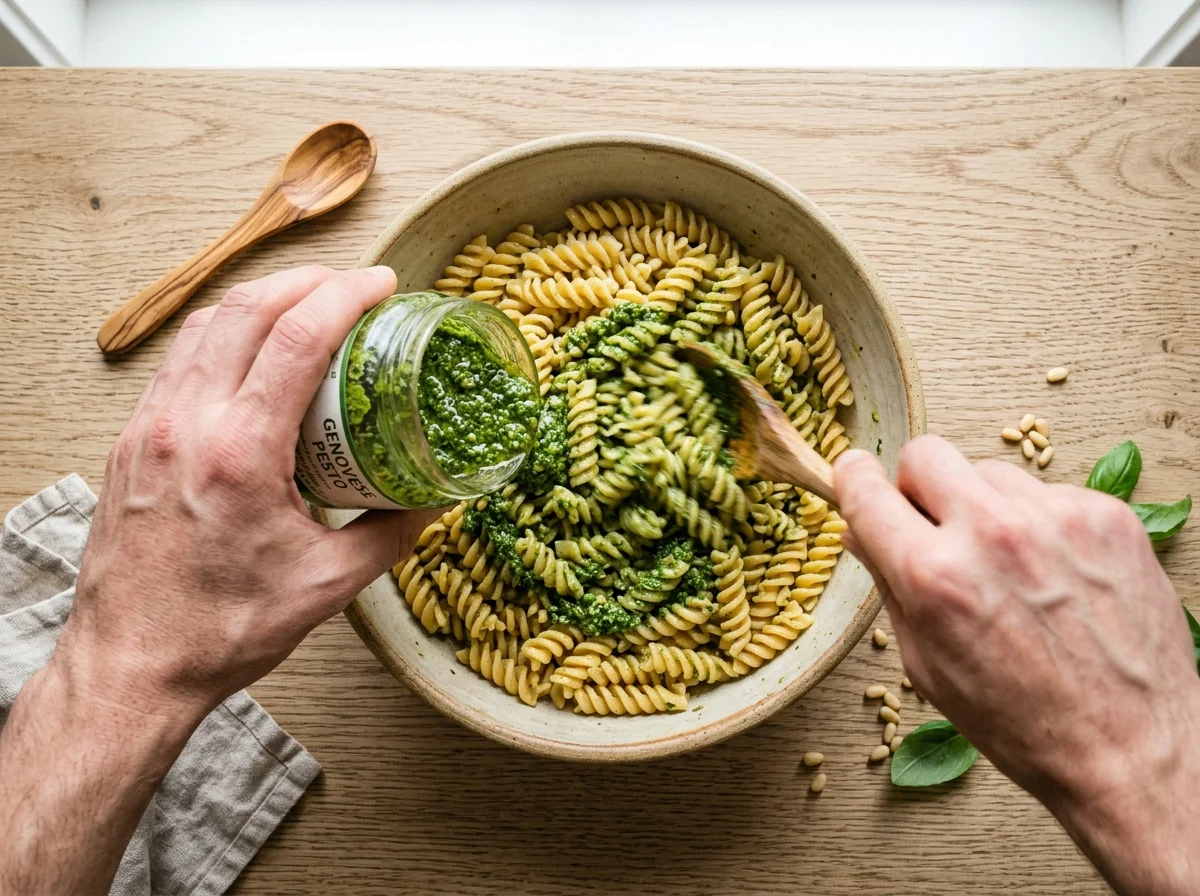
Step 1: Cook your pasta al dente and save the water. Before you drain anything, scoop out at least 1 full cup of pasta water. This starchy liquid is your secret weapon — it's what allows the sauce to emulsify and cling instead of just pooling at the bottom of the bowl. Don't skip this. I used to skip this. Don't be past-Melissa.
Step 2: Warm the pesto gently — never boil it. Add your jarred pesto to a wide skillet over low to medium-low heat (around 150°F to 160°F max). High heat destroys the volatile aromatic compounds in basil, which is why overheated pesto tastes dull and vaguely metallic. You're just warming it through. Thirty seconds, maybe forty-five.
Step 3: Add pasta directly to the pan and toss with water. Drop the drained pasta into the warm pesto, then add pasta water a splash at a time — about 2 tablespoons per round — while tossing with tongs. The starch in the water binds with the oil in the pesto to create an emulsified sauce that coats every strand. That's the science. That's the whole secret.
Pro Tip: If your pesto looks separated or greasy in the jar, whisk in 1 teaspoon of lemon juice before adding it to the pan. The acidity helps re-emulsify the oils and brings back brightness that storage dulls. This little hack makes any brand taste significantly fresher.
What's the Best Way to Use Jarred Pesto With Pasta Without Ruining the Flavor
The single biggest mistake people make when learning how to use pesto from a jar with pasta is treating the pesto like a regular tomato sauce. It's not. Tomato sauce benefits from long cooking and reduction. Pesto hates that. It's a cold-processed, oil-based sauce that wants gentle heat and quick tossing — nothing more.
Honestly? The first time I made this correctly, I was shocked how different it tasted. Same jar. Same pasta. Just different technique. The basil flavor came through so much more clearly, and the texture was silky instead of greasy.
A few additional rules: always season your pasta water generously with salt (it should taste like mild seawater — about 1 tablespoon kosher salt per quart of water). And finish with a squeeze of fresh lemon and a drizzle of good extra virgin olive oil right before serving. That last drizzle adds an aromatic freshness that jarred pesto loses during processing.
Which Pasta Shapes Hold Jarred Pesto Best: Penne vs Spaghetti vs Fusilli
Shape matters more than most people think when it comes to using pesto with pasta from a jar. Here's how I think about it:
| Pasta Shape | Pesto Adhesion | Best For | My Rating |
|---|---|---|---|
| Fusilli | Excellent — spirals trap sauce | Classic pesto pasta dinners | ⭐⭐⭐⭐⭐ |
| Penne | Great — ridges + hollow interior | Pesto penne pasta recipe nights | ⭐⭐⭐⭐⭐ |
| Spaghetti | Good — coats well when tossed | Quick weeknight dinners | ⭐⭐⭐⭐ |
| Farfalle | Moderate — flat surface loses some | Pasta salads | ⭐⭐⭐ |
| Rigatoni | Excellent — large tubes hold sauce | Heartier, chunkier versions | ⭐⭐⭐⭐⭐ |
Fusilli is my personal favorite. Those little spirals grab pesto like they were designed for it — because honestly, they kind of were. Lea, my niece, always requests fusilli when she comes over for dinner. She says the other shapes are "boring" and she's twelve so I trust her judgment completely.
7 Ingredients You Can Add to Jar Pesto Pasta to Make It Restaurant-Worthy — Leveling Up Your Pesto Pasta Game
So you've nailed the basic technique for how to use pesto from a jar with pasta. Now let's talk upgrades. These seven additions cost almost nothing but completely transform the dish from "weeknight staple" to "I'd pay $18 for this at a restaurant."
- Cherry tomatoes — halved and blistered in the pan for 3-4 minutes before adding pesto. The caramelization (from the Maillard reaction at around 300°F) creates little pops of sweetness that balance the savory pesto.
- Toasted pine nuts or walnuts — adds crunch and depth. Toast in a dry pan for 2 minutes until golden. Don't walk away from the stove. They burn fast.
- Fresh mozzarella balls — tear them over the finished pasta. The residual heat softens them just slightly. My sister Melissa always asks "what if we added more cheese" and she is always right.
- Lemon zest — microplaned right over the top just before serving. Brightens everything. Costs nothing.
- Grilled chicken or shrimp — for protein. Adds substance without changing the pesto flavor profile.
- Baby spinach or arugula — toss a handful into the hot pasta and let it wilt. This is the healthy twist I live for.
- A soft-boiled egg — slice it over the top. The jammy yolk mixes into the pesto sauce and creates this incredible richness. Trust me on this one.
You know that feeling when the whole kitchen smells incredible and you haven't even touched the plate yet? That's what this combination does. The basil, the toasted nuts, the lemon zest — it's genuinely stunning.
How Do You Make Creamy Pesto Pasta Without Making It Too Heavy or Oily
The creamy pesto pasta recipe question I get asked most is: "how do I get that restaurant creaminess without it feeling like a brick?" And the answer is Greek yogurt. Not heavy cream. Greek yogurt.
Whisk 3 tablespoons of full-fat Greek yogurt into your warmed pesto before adding the pasta. It adds protein, creates a silky emulsion, and the slight tang actually brightens the basil flavor. You get the richness without the heaviness. I've been doing this for two years and I'll never go back.
The other trick? Keep adding pasta water. The starch in that water does incredible emulsification work — it's the same science behind why restaurant pasta sauces look so glossy. A good creamy pesto pasta weeknight recipe relies entirely on this pasta water technique rather than heavy cream.
Pro Tip: If your creamy pesto pasta looks broken or separated (you'll know — it looks greasy and chunky instead of smooth), add 2 tablespoons of cold pasta water and toss vigorously off the heat. The temperature shock and starch help re-emulsify the sauce almost instantly. This has saved my dinner more than once.
Can Store-Bought Pesto Replace Homemade in a Pesto Penne Pasta Recipe
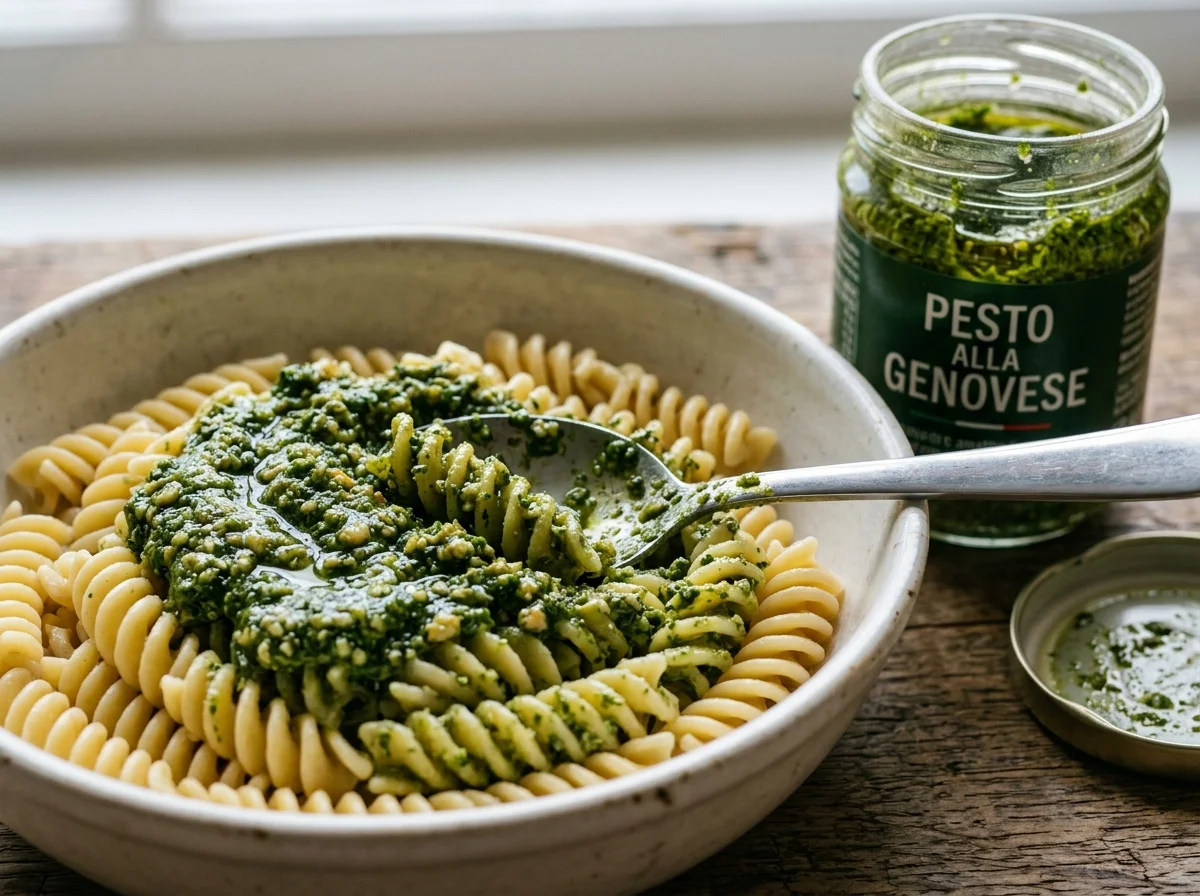
Short answer: yes, absolutely. A good pesto penne pasta recipe works beautifully with jarred pesto when you know how to treat it right. The key is choosing a quality jar — look for pesto where basil is the first ingredient, and where the ingredient list is short. Olive oil, basil, garlic, pine nuts, Parmesan. That's the list you want. Anything with "sunflower oil" as the first ingredient is going to taste flat no matter what you do to it.
To compensate for the flavor loss that happens during jarring and storage, I always add: 1 tablespoon fresh lemon juice, 1 small minced garlic clove, and a small handful of fresh basil leaves torn in at the very end. This "freshens up" the jarred pesto and brings it about 90% of the way to homemade. Honestly? Sometimes I prefer it — the consistency is more reliable.
Full Nutritional Breakdown: Exactly How Many Calories Are in a Jar Pesto Pasta Serving — Making Smart Choices With Pesto Pasta
Let's talk numbers, because I know a lot of you are thinking about this. Pesto is an oil-based sauce, which means it's calorie-dense — but it's also packed with healthy fats, particularly the monounsaturated fats from olive oil that research links to heart health benefits. Context matters.
How to Cut Calories in Creamy Pesto Pasta Without Sacrificing Taste
There are a few smart swaps that genuinely work without making you feel like you're eating diet food. And I say this as someone who has tried — and hated — most diet pasta versions.
First: use half the jarred pesto and supplement with pasta water and lemon juice. You still get full pesto flavor at half the calorie load. Second: swap regular pasta for a legume-based pasta (chickpea or lentil) — you'll add 8-10 grams of protein per serving and drop the glycemic impact significantly. Third: bulk it up with vegetables. Roasted zucchini, blistered cherry tomatoes, wilted spinach — all add volume and nutrients without meaningful calories.
The Greek yogurt swap I mentioned earlier is probably the single most effective calorie-cutting move in the whole healthy pesto pasta recipe vegetarian toolkit. You're cutting roughly 80-100 calories per serving compared to cream, while actually increasing protein.
Macros Per Serving: Protein, Fat, and Carbs in a Standard Pesto Pasta Bowl
| Version | Calories | Protein | Carbs | Fat |
|---|---|---|---|---|
| Classic jar pesto pasta | 480 | 14g | 52g | 22g |
| With Greek yogurt (no cream) | 390 | 20g | 50g | 14g |
| With chickpea pasta + yogurt | 360 | 26g | 42g | 13g |
| With added chicken breast | 540 | 38g | 50g | 16g |
| Vegan dairy-free version | 420 | 16g | 54g | 18g |
If you're aiming for a higher-protein dinner — which is peak January energy — the chickpea pasta plus Greek yogurt version is genuinely the move. It doesn't taste like health food. It tastes like pasta. I make this for myself on nights when I've been on my feet all day and need something satisfying but not heavy.
Vegan and Gluten-Free Pesto Pasta Variations Nobody Else Is Talking About — Inclusive Pesto Pasta for Every Diet
This is where I get really excited, because the mainstream pesto pasta conversation always stops at "add Parmesan and call it done." But what about everyone else? The dairy-free people, the gluten-free people, the full-vegan households? Learning how to use pesto from a jar with pasta across different dietary needs opens up a whole new world of possibilities.
How Do You Make Pesto Dairy-Free Without Losing That Rich, Savory Depth
Nutritional yeast. That's the answer. Three tablespoons of nutritional yeast replaces Parmesan in pesto almost perfectly — it has that same umami, savory depth, and slightly nutty quality. It's not identical, but it's close enough that my brother-in-law James (who is very much a "where's the cheese" guy) didn't notice the swap the one time I made it for dinner.
For a fully dairy-free jar pesto pasta, look for brands that are already vegan — many store-bought pestos are actually dairy-free, so check the label. If yours contains cheese, thin it with olive oil and a tablespoon of cashew cream (just soaked cashews blended with water) to add back the richness. Finish with extra nutritional yeast on top. It's sooo good. Genuinely, I was not expecting it to work as well as it does.
Another move: blend 2 tablespoons of tahini into the sauce before tossing. The sesame adds a subtle richness and depth that's kind of fusion-y — very much my personal wheelhouse.
The Best Gluten-Free Pasta Shapes That Pair Perfectly With Jar Pesto
Gluten-free pasta has come a long way. The brands I trust most for pesto pasta are brown rice fusilli and chickpea penne — both hold their shape well and don't get that mushy texture that plagued early GF pastas.
The key with gluten-free pasta is to slightly undercook it (pull it 1-2 minutes before the package says) because it continues cooking in the warm pesto pan. Also: GF pasta releases less starch into the water, so your pasta water won't emulsify the sauce quite as effectively. Compensate by adding an extra teaspoon of olive oil and tossing more vigorously. It still works beautifully.
Brown rice fusilli is my top pick specifically because its slightly chewy texture pairs so well with the oily, herby sauce — the contrast is genuinely lovely.
Pine Nuts Too Expensive? 5 Budget Substitutes That Work Even Better in Pesto — Making Pesto Pasta Affordable
Okay, real talk: pine nuts are absurd right now. Like, I almost fell over the last time I checked the price at Whole Foods. But here's the thing — some of the best pesto I've ever made used substitutes, not pine nuts. And this matters for how to use pesto from a jar with pasta too, because if you're topping or finishing with homemade elements, cost adds up.
My five favorite pine nut substitutes:
- Walnuts — earthy, slightly bitter, most flavor-similar to pine nuts. Toast them first. Always toast them first.
- Cashews — mild, buttery, and they blend incredibly smoothly for a creamy pesto.
- Sunflower seeds — the budget champion. Neutral flavor, great texture. Use raw or lightly toasted.
- Pumpkin seeds (pepitas) — slightly nutty, gorgeous green color, and they add a really interesting earthy note.
- Almonds (blanched) — subtle and smooth. Works especially well in a lighter, more delicate pesto.
Pro Tip: Whatever substitute you use, toast it in a dry skillet over medium heat for 2-3 minutes until fragrant before blending. Toasting activates the Maillard reaction in the nuts' surface proteins and sugars — it deepens flavor by a noticeable degree and makes even the cheapest substitutes taste rich and complex.
How Homegrown Basil and Herbs Can Upgrade the Flavor of Any Jarred Pesto
This one is personal. I have a little balcony herb garden — nothing fancy, just a few pots — and the basil I grow out there has completely changed how I cook. Even just a handful of fresh basil torn into jarred pesto before serving makes it taste infinitely more alive. The volatile aromatic oils in fresh basil (primarily linalool and eugenol, if you want to get technical) are exactly what gets dulled during the jarring process. Fresh herb addition restores that quality.
Beyond basil, try adding: fresh flat-leaf parsley (adds brightness), fresh mint (sounds weird, works wonderfully in a lemon pesto pasta), or a few fresh chive blades snipped over the top. Even a little fresh oregano works. These additions cost nothing if you grow them and they make jarred pesto taste genuinely special.
Walnuts vs Cashews vs Sunflower Seeds: Which Pine Nut Swap Tastes Closest
| Substitute | Flavor Profile | Closest to Pine Nuts | Best Use | Avg. Cost/lb |
|---|---|---|---|---|
| Walnuts | Earthy, slightly bitter | ⭐⭐⭐⭐ | Classic pesto, hearty dishes | $8-10 |
| Cashews | Buttery, mild, sweet | ⭐⭐⭐⭐ | Creamy pesto, vegan versions | $10-12 |
| Sunflower seeds | Mild, neutral | ⭐⭐⭐ | Budget cooking, light pesto | $3-4 |
| Pepitas | Earthy, nutty | ⭐⭐⭐ | Fusion twists, Mexican-inspired | $5-6 |
| Almonds (blanched) | Subtle, clean | ⭐⭐⭐ | Delicate pestos, light dishes | $7-9 |
My personal verdict: walnuts win on flavor closest to the original, but cashews win on texture and creaminess. If I'm making pesto from scratch to use with jar pesto pasta as a topping or enhancer, I reach for cashews every time. But for straight-up budget cooking? Sunflower seeds are literally the best bang for your buck I've found.
The One Trick I Discovered That Makes Jarred Pesto Stick to Pasta Perfectly — The Secret to Pesto Pasta That Actually Coats
I almost gave up on jarred pesto pasta entirely before I figured this out. Every time I made it, the sauce would slide off the pasta and pool at the bottom of the bowl. Sad, greasy puddle of pesto. Not what I was going for. And then I learned about pasta water emulsification and everything clicked.
The trick is this: you never add pasta water all at once. You add it in small increments — about 2 tablespoons at a time — while tossing continuously. Each addition of starchy water gets incorporated into the oil-based pesto through vigorous mechanical action (tossing with tongs counts as mechanical action — science is in your kitchen). The result is a sauce that's genuinely emulsified, meaning the water and oil molecules have bonded, creating a stable, clingy coating.
Why Adding Pasta Water to Jar Pesto Changes Everything About the Final Dish
Here's the actual science for the curious ones. Pasta water contains dissolved starch molecules that act as emulsifiers. When you add this starchy water to an oil-based sauce and agitate it (tossing the pasta), the starch molecules position themselves at the oil-water interface, stabilizing the mixture. This is the same principle behind traditional Italian pasta sauces like cacio e pepe and carbonara.
The result? Sauce that coats. Sauce that clings. Sauce that's there in every forkful instead of sitting in a puddle waiting for you to chase it around the bowl. When you're figuring out how to use pesto from a jar with pasta at its very best, this is the technique that separates okay pasta from genuinely great pasta.
How much pasta water per how much pesto? As a rule: 1/4 cup pasta water per every 1/3 cup of jarred pesto. Start there, then adjust. You want the sauce to look glossy and coat the back of a spoon — not watery, not clumpy, not separated.
How Long Can You Store Leftover Pesto Pasta and Keep It Tasting Fresh
Three to four days in an airtight container in the fridge. That's the window. Beyond that, the pasta absorbs so much pesto that the sauce loses its presence, and the basil starts to taste a little... tired. Still edible, but not the same.
Best storage strategy: if you're planning ahead, store the cooked pasta and the pesto sauce separately. Pesto keeps 5-7 days in a sealed jar in the fridge — just make sure there's a thin layer of olive oil over the surface to prevent oxidation (that brown layer that forms on top). When ready to eat, reheat the pasta in a skillet with a splash of water over medium heat, then toss in fresh pesto.
Can you freeze pesto pasta? I wouldn't. The pasta gets mushy and the pesto separates weirdly. But you can absolutely freeze the pesto alone in ice cube trays — each cube is roughly 1-2 tablespoons, perfect for portioning. That's how I handle the end of basil season from my balcony garden every year.
Nutrition Per Serving (1 of 4 servings, standard version)
- Calories: 480 kcal
- Protein: 14g
- Total Fat: 22g
- Saturated Fat: 5g
- Carbohydrates: 52g
- Fiber: 3g
- Sugars: 2g
- Sodium: 420mg
Nutrition estimates based on standard ingredients. Values vary by brand and specific quantities used.
Frequently Asked Questions About Pesto Pasta From a Jar
How do I make light pesto pasta less heavy and oily?
The key to lighter pesto pasta is reducing oil and using Greek yogurt or ricotta instead of heavy cream. Use 2-3 tablespoons of olive oil per cup of basil when making pesto, and always reserve 1 cup of pasta water before draining. Toss hot pasta with warmed pesto, then add pasta water gradually to create a silky sauce without cream. For jarred pesto, mix 3 tablespoons with 1/2 cup low-fat Greek yogurt and pasta water to emulsify. The starch in pasta water naturally binds the sauce, cutting calories significantly without losing that satisfying, coated texture.
What's the best way to use jarred pesto with pasta?
Knowing how to use pesto from a jar with pasta the right way means thinning it with reserved pasta water — use 1/4 cup per 1/2 cup jarred pesto. Heat the pesto gently without boiling, as high heat damages basil's flavor compounds. Add hot drained pasta directly to the pan and toss for 2-3 minutes so the starch emulsifies the sauce. For creamier texture, whisk in 2-3 tablespoons Greek yogurt or add a splash of lemon juice and extra virgin olive oil. Finish with fresh basil, lemon zest, and quality Parmesan for a result that tastes genuinely homemade.
Can I make light pesto pasta with store-bought pesto instead of fresh?
Absolutely. Quality jarred pesto is a convenient time-saver that yields great results when used correctly. Look for pesto with recognizable ingredients: basil, garlic, pine nuts, cheese, olive oil. Mix one 6-7 ounce jar with 1 pound cooked pasta and 3/4 cup reserved pasta water for proper consistency. To brighten the flavor, add fresh lemon juice, minced garlic, and fresh basil leaves. You can achieve 90% of homemade pesto quality with jarred pesto in half the time — ideal for weeknight dinners when you want a healthy pesto pasta recipe vegetarian option with minimal effort.
What's a good substitute for pine nuts in pesto if they're too expensive?
Walnuts, almonds, sunflower seeds, and pumpkin seeds all work excellently as affordable alternatives. Use the same quantity as the recipe calls for. Walnuts offer the closest flavor match — earthy and rich — while sunflower seeds are the most budget-friendly at roughly $3-4 per pound. Toast any substitute for 2-3 minutes before blending to deepen the flavor through caramelization. Each creates a slightly different pesto profile, but all are genuinely delicious and far cheaper than pine nuts without sacrificing quality.
How do I make pesto dairy-free for light pesto pasta?
Create dairy-free pesto by replacing Parmesan with 1/2 cup nutritional yeast — it provides similar umami depth and savory richness. Blend 2 cups fresh basil, 1/2 cup nuts, 1/3 cup olive oil, 2 garlic cloves, 1/2 teaspoon salt, and 1/4 cup nutritional yeast until smooth. Finish with reserved pasta water while tossing to create silky emulsification. For extra creaminess without dairy, blend 2 tablespoons cashew cream or tahini into the sauce. This approach reduces fat while maintaining full satisfaction — perfect for vegan and dairy-free diets.
How long can I store light pesto pasta in the refrigerator?
Cooked pesto pasta keeps for 3-4 days in an airtight container when refrigerated immediately after cooling. For best results, store pesto and pasta separately — pesto lasts 5-7 days in a sealed jar with a thin layer of olive oil over the surface to prevent oxidation. To reheat, add 1-2 tablespoons water or broth to 1 cup pasta and warm gently in a skillet over medium heat for 2-3 minutes, stirring occasionally. Never use high heat — it damages pesto's delicate basil flavor. You can also serve chilled as a pasta salad with fresh lemon juice and extra vegetables.
Disclaimer: This article is for informational and culinary purposes only. It does not replace professional dietary or medical advice.
Final Thoughts on Getting Jar Pesto Pasta Right Every Time
Here's the honest truth: once you really understand how to use pesto from a jar with pasta — the gentle heat, the pasta water trick, the finishing touches — you'll never go back to the sad, separated pesto bowl. This is one of those techniques that genuinely transfers to better cooking across the board.
And knowing how to use pesto from a jar with pasta well means you always have a fast, impressive, genuinely delicious dinner in your back pocket. Whether it's a Thursday night with Lea demanding fusilli, or a holiday dinner where you want something crowd-pleasing but not exhausting — this has you covered. It's also incredibly seasonal: lighter pasta dishes feel perfect in the spring and summer, while creamy, heartier variations are sooo right for those cold November and December evenings.
If you love easy, cozy, one-pan dinners like this, you'll definitely want to try our hearty chicken tortellini soup — it's got that same effortless weeknight energy. And for those nights when you want something rich and comforting, our juicy French onion pot roast recipe is pure weekend soul food.
Come hang out with us more — read a little about our family and our cooking story, and if you have questions or just want to share what you made, drop us a line on the contact page. We genuinely love hearing from you. Browse more delicious recipes at lamyrecipes.com!
Why Trust Me?
I'm Melissa, the creative wildcard behind lamyrecipes.com. I've been cooking since I was old enough to stand on a step stool next to my grandmother, and I've spent years obsessively testing techniques — including burning more than a few batches of overheated pesto before figuring out exactly how heat destroys basil flavor. I'm not a professional chef, but I'm a deeply obsessive home cook who only shares techniques I've personally tested, failed at, and then finally nailed. My sister Evelyn (the technique queen) and my brother-in-law James (the honest food guy) keep me accountable. Everything on this site is real food, tested in a real kitchen, for real weeknights.
I'd love to hear from you! What's your favorite way to make Light Pesto Pasta — do you stick to the classic jar pesto technique, or do you have a secret upgrade you swear by? Drop it in the comments below!
From the LamyRecipes kitchen
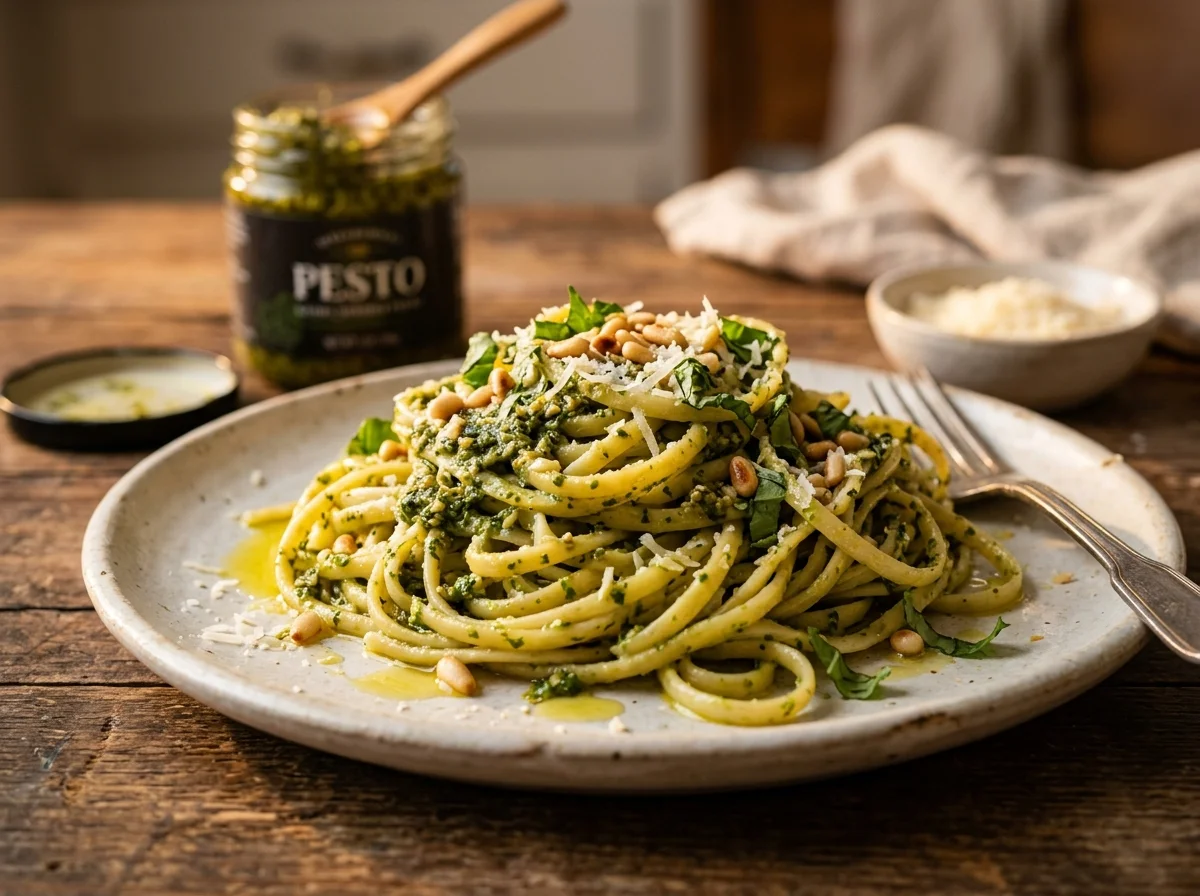
Easy Jar Pesto Pasta — The Right Technique
Prep Time: 10 minutes | Cook Time: 15 minutes | Total Time: 25 minutes | Servings: 4
- Servings
- 1 servings
Ingredients
- 12 oz (340g) fusilli or penne pasta
- 1 jar (6-7 oz) quality basil pesto — look for basil as first ingredient
- 1 cup reserved pasta water (saved before draining)
- 3 tablespoons full-fat Greek yogurt (optional (for creaminess))
- 1 tablespoon fresh lemon juice
- 1 teaspoon lemon zest
- 1 small garlic clove (minced)
- 1 handful fresh basil leaves (torn)
- 2 tablespoons toasted pine nuts or walnuts
- 1/4 cup freshly grated Parmesan (or nutritional yeast for dairy-free)
- Kosher salt and black pepper to taste
- 1 tablespoon extra virgin olive oil (for finishing)
- Optional add-ins: cherry tomatoes, baby spinach, grilled chicken, soft-boiled egg
Instructions
Salt your water generously. Bring a large pot of water to a boil. Add 1 tablespoon kosher salt per quart — it should taste like mild seawater. Cook pasta according to package directions, pulling it out 1 minute before the package says for al dente texture.
Reserve the pasta water. Before draining, scoop out at least 1 full cup of starchy pasta water. Don't forget this — it's the whole game. Use a large heatproof measuring cup.
Warm the pesto gently. In a large wide skillet or sauté pan over low heat, add the jarred pesto and minced garlic. Warm for 30-45 seconds — you're not cooking it, just bringing it to room temperature so it coats evenly. Do not let it bubble.
Add pasta to the pan. Drain pasta and add directly to the warm pesto pan. Turn heat to medium-low. Toss with tongs to coat, then begin adding pasta water 2 tablespoons at a time, tossing continuously between each addition.
Emulsify the sauce. After adding approximately 1/4 to 1/3 cup total pasta water, the sauce should look glossy and clingy. If using Greek yogurt, whisk it in now and toss to combine. The starch and yogurt create a silky, emulsified coating.
Add brightness. Squeeze in lemon juice and add the lemon zest. Toss once more. Taste and adjust salt.
Finish and serve. Remove from heat. Tear fresh basil over the top, scatter toasted nuts, and finish with a drizzle of extra virgin olive oil. Grate Parmesan over each bowl just before serving. Serve immediately in warmed bowls.