A make-ahead challah French toast casserole with molasses, ginger, cinnamon and a tender custard center. Serve warm with maple syrup.
- Estimated prep
- 20 min
- Estimated cooking
- 45 min
- Total
- 9 hr 15 min
- Makes
- 8 servings
This overnight gingerbread French toast casserole turns a loaf of challah into a warm breakfast for eight, with crisp, toasted corners and a soft, spiced custard inside. Assemble it the night before, then bake it at 350°F in the morning. Molasses, ginger and cinnamon bring the familiar holiday flavor without a separate gingerbread batter or an eggnog sauce.
Plan on 20 minutes of prep, about 8 hours in the refrigerator, 40 to 50 minutes of baking and a 10-minute rest. The central trick is to soak the bread evenly and judge doneness at the middle of the dish, not just by the color on top.
Choose bread and gingerbread spices
Choose a 1-pound loaf of day-old challah and cut it into rough 1-inch cubes. The slightly dry surface absorbs the custard while the sturdy crumb helps the pieces hold their shape. Very fresh bread can be cut and left spread out for a few hours before assembly; if it is still soft, handle it gently. French bread is a reasonable alternative, though its crust may stay a little firmer. Avoid thin sandwich slices, which tend to disintegrate when soaked.
Use unsulfured regular molasses, not blackstrap, for a rounded gingerbread flavor without an overpowering bitter edge. Brown sugar softens the intensity of the molasses. Ground ginger and cinnamon carry most of the spice, while a small amount of nutmeg and cloves fills out the aroma. If you prefer vanilla custard with a caramelized top, our crème brûlée French toast is a different way to make a special breakfast.
Assemble the casserole the night before
Grease a 9-by-13-inch metal baking pan (paid link) with 1 tablespoon of the butter. Scatter the bread cubes evenly in the pan without packing them down. Whisk the eggs first until no streaks of white remain, then whisk in the milk, half-and-half, molasses, brown sugar, vanilla, spices and salt. Scrape the bottom of the bowl so the thick molasses does not stay behind.
Pour the custard slowly over the entire surface, including the corners. Press the upper cubes gently with the back of a spoon until they are damp, not crushed. Look for an even tan coating over the bread. Some liquid at the bottom is normal; the overnight rest gives the cubes time to absorb it.
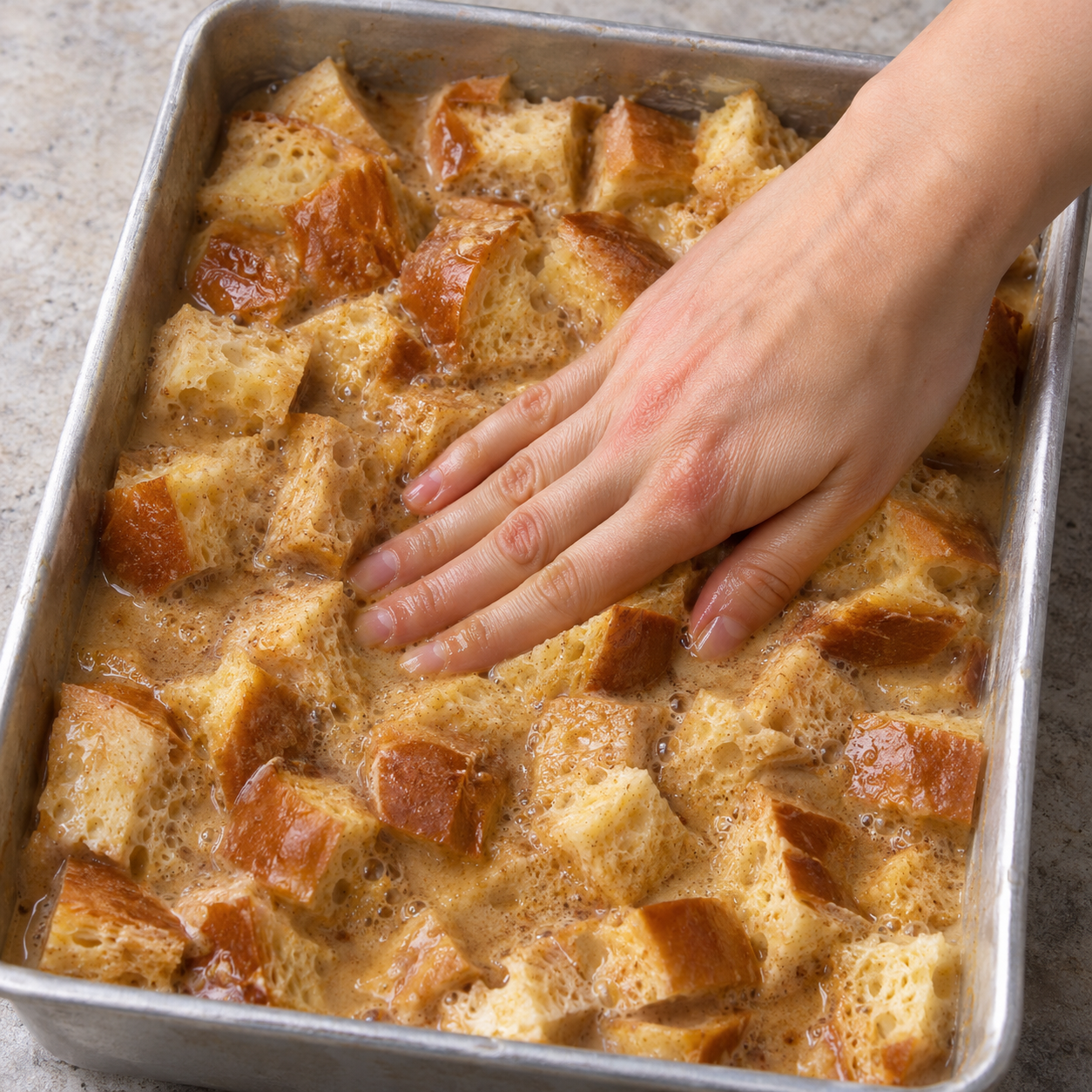
Cover and refrigerate at 40°F or below for about 8 hours, then bake the next morning. Do not leave the raw egg mixture on the counter overnight, and cook it within 24 hours of mixing. If a few tops look dry in the morning, spoon the liquid from a corner back over them rather than adding a large amount of milk.
Bake for crisp edges and a tender center
Heat the oven to 350°F. Keep the casserole chilled until the oven is ready. Uncover briefly and drizzle the remaining 2 tablespoons of melted butter over the bread. Cover the pan with foil and bake for 25 minutes. The cover gives the custard a chance to heat without the exposed pieces browning too early.
Remove the foil and bake for another 15 to 25 minutes. Look for puffed, golden-brown cubes around the edges and a middle that no longer sloshes when you gently move the pan. Check the middle with an instant-read thermometer: it needs to reach 160°F, even if the top already looks done. If the center has not reached that temperature, return the pan to the oven in five-minute intervals, covering loosely with foil if the bread is getting dark.
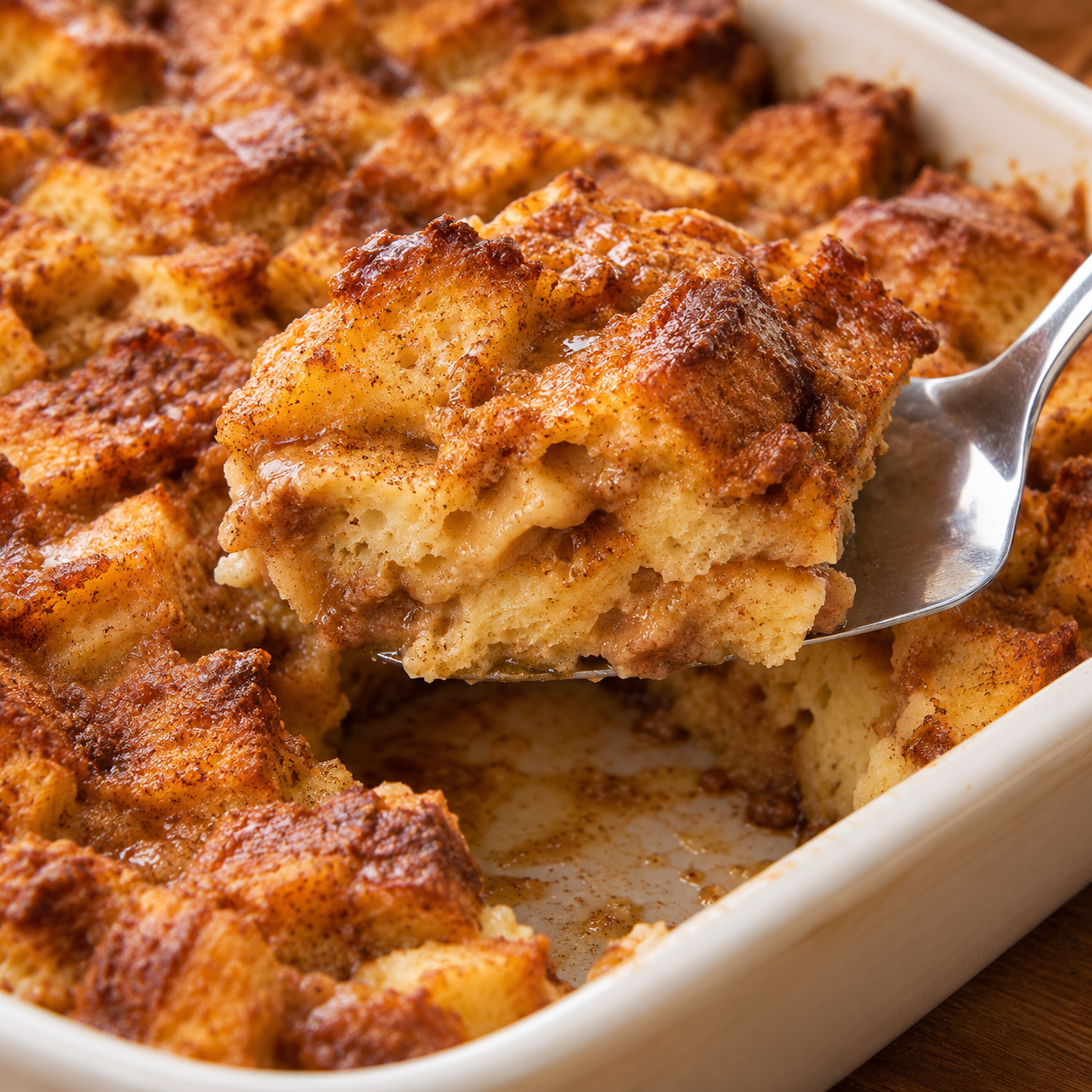
The FDA's egg safety guidance recommends 160°F for casseroles containing eggs. A golden crust alone is not a reliable sign that the middle is safe. Rest the finished casserole for 10 minutes before cutting into eight portions. The rest allows the hot custard to settle, making the servings easier to lift.
What to serve with gingerbread French toast
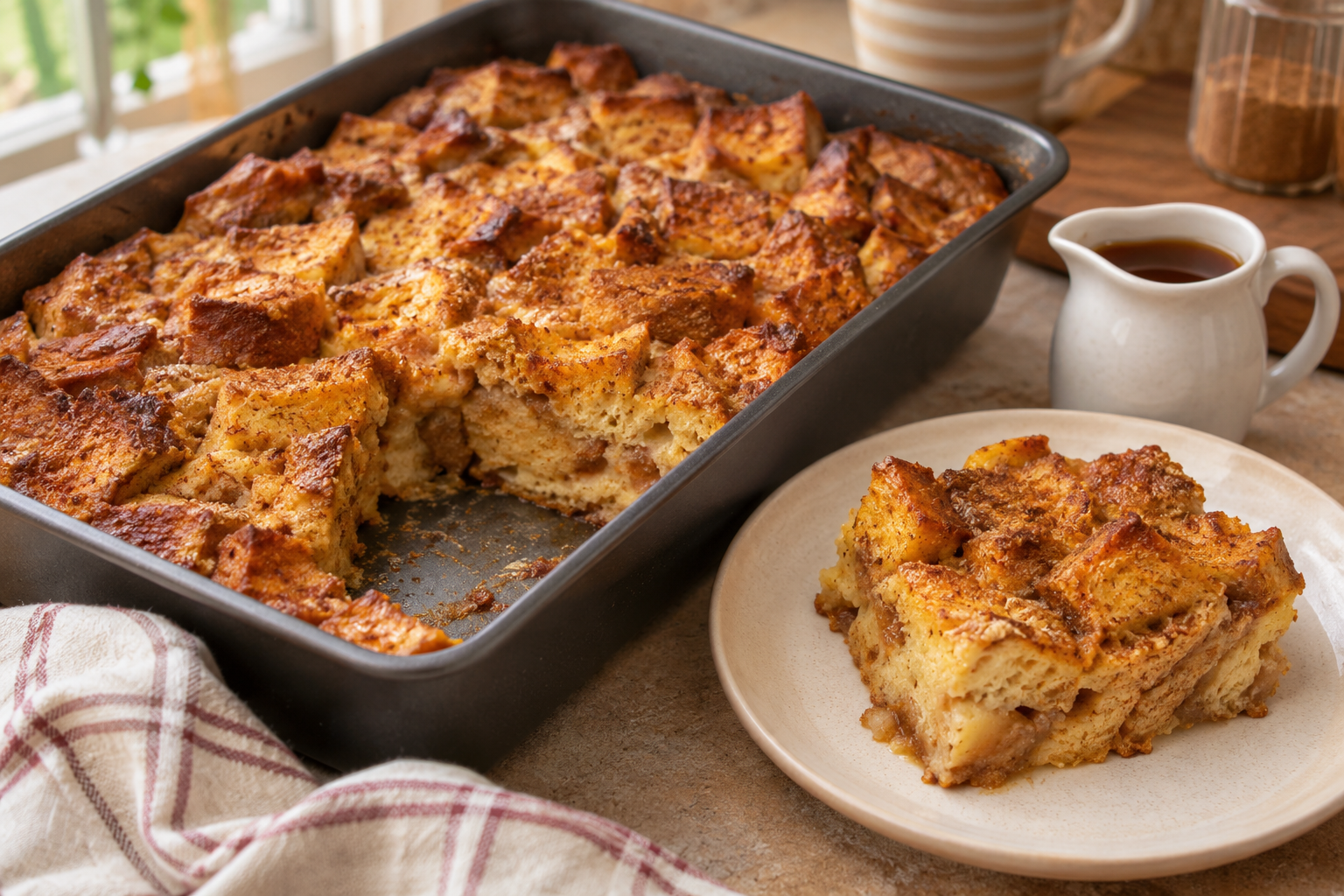
Set a small pitcher of maple syrup on the table instead of pouring syrup over the whole casserole. That keeps the exposed edges crisp and lets everyone control the sweetness. For a more varied holiday spread, serve it beside our cranberry and almond breakfast crumble if you want a tart fruit option, or make slow cooker chai latte for a warm drink with complementary spices.
If you need another warm breakfast for a different morning, pear and cardamom baked oatmeal uses oats and fruit instead of bread and molasses. There is no need for a separate sweet glaze here; the spiced custard already carries the gingerbread flavor.
Store and reheat leftovers
Refrigerate leftovers in shallow covered containers within two hours of baking, or within one hour if the room is above 90°F. Eat refrigerated portions within 3 to 4 days. Reheat a portion in a 325°F oven, loosely covered until hot throughout, then remove the cover briefly to revive the surface. Alternatively, use a microwave in short intervals. Reheat leftovers to 165°F.
A shallow container makes it easier for the food to cool quickly. If only part of the casserole is needed, portion the rest before chilling rather than leaving the entire pan on the brunch table. The crisp tops soften during refrigeration; oven reheating works better for restoring some of that texture.
A calmer Christmas morning
Do the measuring and whisking the night before, then keep breakfast simple in the morning: preheat the oven, bake, check the center, and let it rest while you set the table. Serve the casserole warm with maple syrup on the side, giving everyone the choice of a little extra sweetness without losing those toasted bread corners.
Recipe
Overnight Gingerbread French Toast Casserole
A make-ahead challah French toast casserole with molasses, ginger, cinnamon and a tender custard center. Serve warm with maple syrup.
- Servings
- 8 servings
- Estimated prep
- 20 min
- Estimated cooking
- 45 min
- Total time
- 9 hr 15 min
Ingredients
- 1 pound day-old challah bread, cut into 1-inch cubes
- 3 tablespoons unsalted butter, divided
- 6 large eggs
- 2 cups whole milk
- 1/2 cup half-and-half
- 1/4 cup unsulfured regular molasses
- 1/4 cup packed light brown sugar
- 2 teaspoons vanilla extract
- 2 teaspoons ground cinnamon
- 1 1/2 teaspoons ground ginger
- 1/4 teaspoon ground nutmeg
- 1/8 teaspoon ground cloves
- 1/2 teaspoon fine salt
- Maple syrup, for serving (optional)
Instructions
Grease a 9-by-13-inch metal baking pan with 1 tablespoon butter. Spread the 1-inch challah cubes evenly in the pan.
Whisk eggs until smooth. Whisk in milk, half-and-half, molasses, brown sugar, vanilla, cinnamon, ginger, nutmeg, cloves and salt; scrape the bottom of the bowl to incorporate the molasses.
Pour custard evenly over bread. Gently press the cubes with a spoon until damp without crushing. Cover and refrigerate at 40°F or below for 8 hours; bake within 24 hours of mixing.
Preheat oven to 350°F. Remove pan from refrigerator when oven is ready. Spoon any pooled custard over dry spots. Melt remaining 2 tablespoons butter and drizzle over the bread. Cover with foil and bake 25 minutes.
Remove foil and bake 15 to 25 minutes, until edges are golden and center reaches 160°F on a food thermometer. If needed, continue in five-minute intervals, tenting loosely if browning too quickly.
Rest 10 minutes, cut into 8 portions and serve warm with optional maple syrup.